
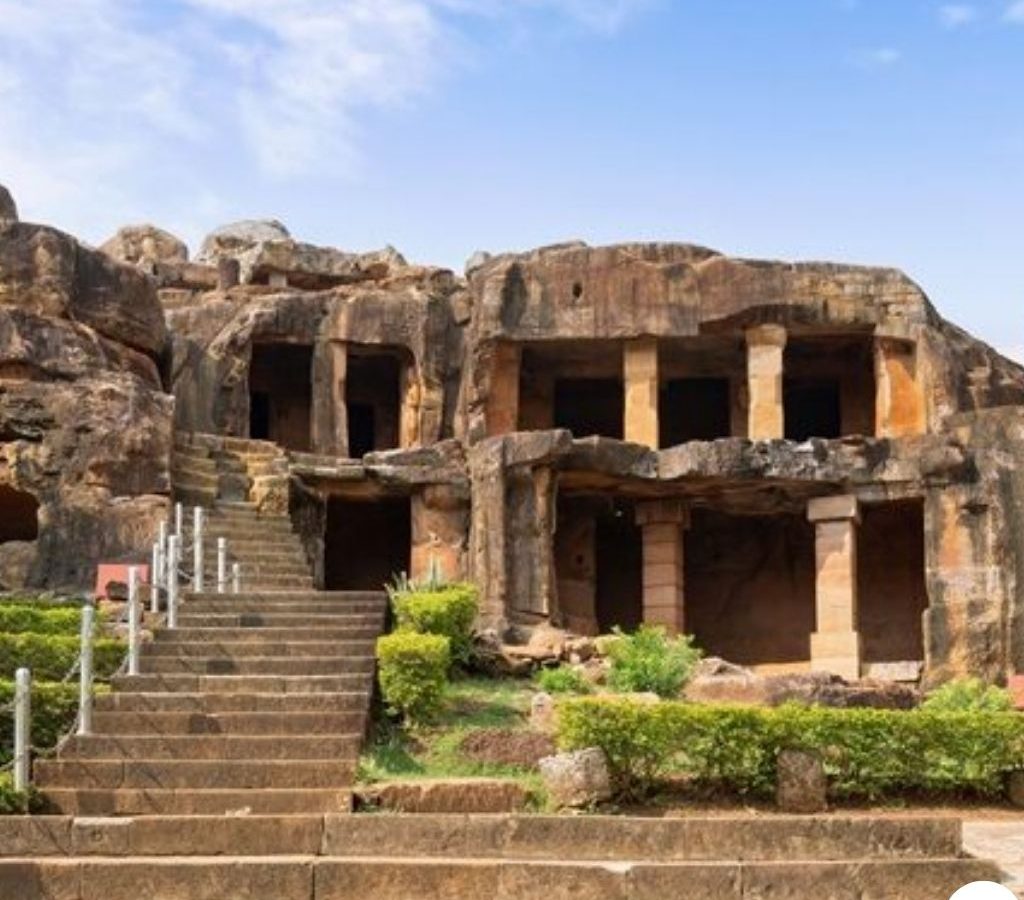
Khandagiri is a historically significant hill located on the western outskirts of Bhubaneswar, the capital city of Odisha, India. Along with its twin hill, Udayagiri, it forms one of the most important archaeological and religious sites in Eastern India. The hills are renowned for their ancient rock-cut caves, which were carved during the 2nd century BCE under the patronage of King Kharavela of the Mahameghavahana dynasty.
The caves at Khandagiri, primarily Jain monastic dwellings, reflect the spiritual and artistic legacy of Jain ascetics who once meditated and lived here. Each cave is intricately sculpted, showcasing early examples of Indian rock-cut architecture, decorated with carvings of animals, floral motifs, and Jain symbols.
Today, Khandagiri stands as a prominent heritage and pilgrimage site, attracting historians, archaeologists, devotees, and tourists alike. It offers a glimpse into ancient Odisha’s cultural synthesis—where religion, art, and history blend harmoniously amid natural surroundings.
Etymology
The name “Khandagiri” is derived from two Odia and Sanskrit words — “Khanda” meaning “broken” or “fragmented”, and “Giri” meaning “hill”. Hence, the term Khandagiri literally translates to “Broken Hill” or “Fragmented Hill”, possibly referring to its rocky and uneven terrain shaped by natural erosion and ancient excavations.
In historical and literary references, the hill has also been mentioned alongside Udayagiri, its twin counterpart, as part of a combined complex known for Jain cave architecture. While Udayagiri signifies the “Hill of the Rising Sun”, Khandagiri represents its complementary geological and spiritual form, often symbolizing detachment and asceticism in Jain philosophy.
The name appears in various inscriptions, travel records, and local folklore, establishing its long-standing recognition as one of the earliest centers of Jain heritage in Eastern India.
Historical Background
The history of Khandagiri dates back to the 2nd century BCE, during the reign of King Kharavela, the illustrious ruler of the Mahameghavahana dynasty of Kalinga (present-day Odisha). King Kharavela is widely credited for commissioning the excavation of caves on both Udayagiri and Khandagiri hills to serve as residences for Jain monks and ascetics.
According to the famous Hathigumpha inscription (engraved on the nearby Udayagiri hill), Kharavela was a devout follower of Jainism and a patron of art, culture, and architecture. His reign marked a period of religious tolerance and artistic innovation, when Kalinga became a flourishing center for Jain learning and monastic activities.
The caves at Khandagiri were not natural formations, but were manually carved out of laterite rock, representing one of the earliest examples of rock-cut architecture in India. These caves were primarily used by Jain monks for meditation (dhyana) and ascetic practices, reflecting the simplicity and austerity of the Jain way of life.
Over the centuries, Khandagiri continued to hold religious and cultural importance, though some caves suffered from natural decay and partial destruction. Archaeological evidence suggests that the site saw multiple phases of occupation and modification, indicating its continuous significance from the ancient to the medieval period.
Geography and Location
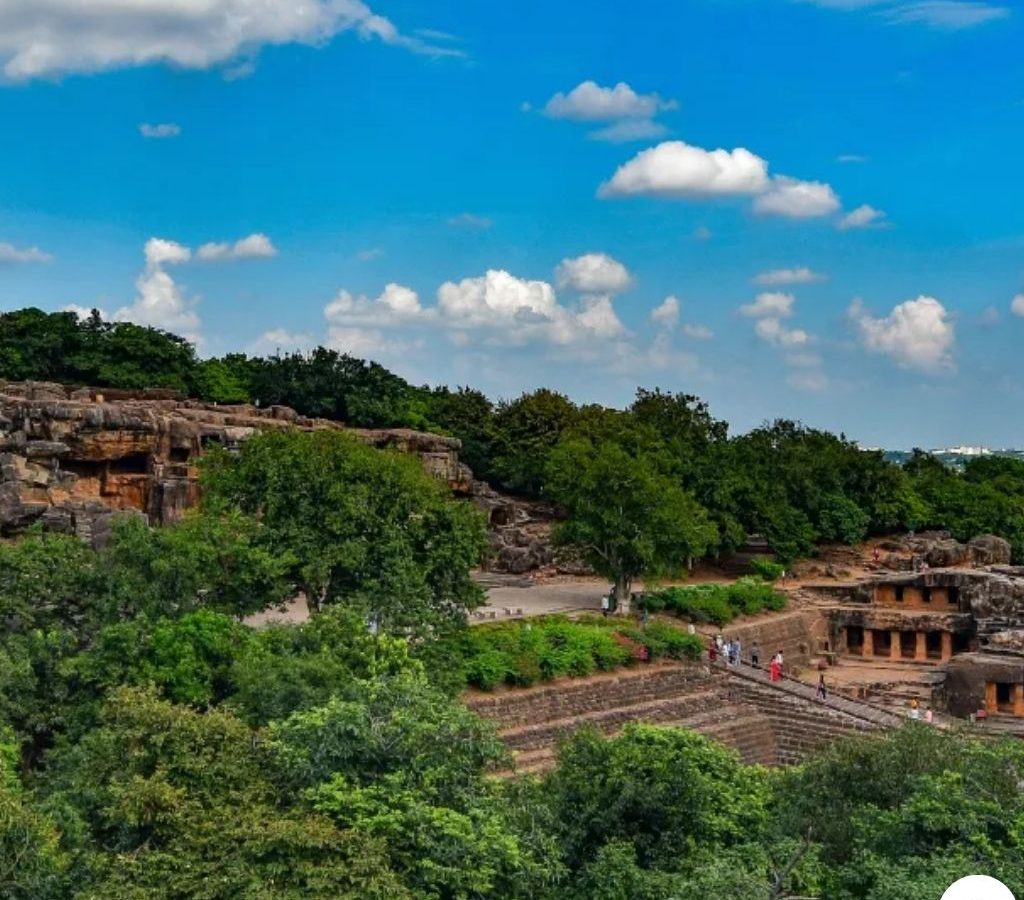
Khandagiri Hill is situated approximately 7 kilometers west of Bhubaneswar, the capital city of Odisha, India. Geographically, it forms part of the Khandagiri–Udayagiri twin hill complex, positioned along National Highway 16 (NH-16), which connects Bhubaneswar to Cuttack. The hills are easily visible from the highway and serve as a major landmark for travelers approaching the city.
The geographical coordinates of Khandagiri are approximately 20.24°N latitude and 85.78°E longitude. The hill rises to a modest elevation of about 118 feet (36 meters) above the surrounding plains, composed mainly of laterite rock, which is reddish-brown in color and relatively soft for carving. This geological composition made it suitable for ancient artisans to excavate rock-cut chambers and sculptural reliefs.
Khandagiri is surrounded by dense greenery, small villages, and urban extensions of Bhubaneswar, creating a blend of natural and cultural scenery. From the top of the hill, visitors can enjoy panoramic views of the city, including the nearby Udayagiri Hill, agricultural fields, and distant temple spires.
The region experiences a tropical climate, with hot summers, moderate monsoons, and mild winters, making the site accessible throughout the year. Its close proximity to Bhubaneswar city ensures convenient access via road, rail, and air, making it one of the most visited archaeological sites in Odisha.
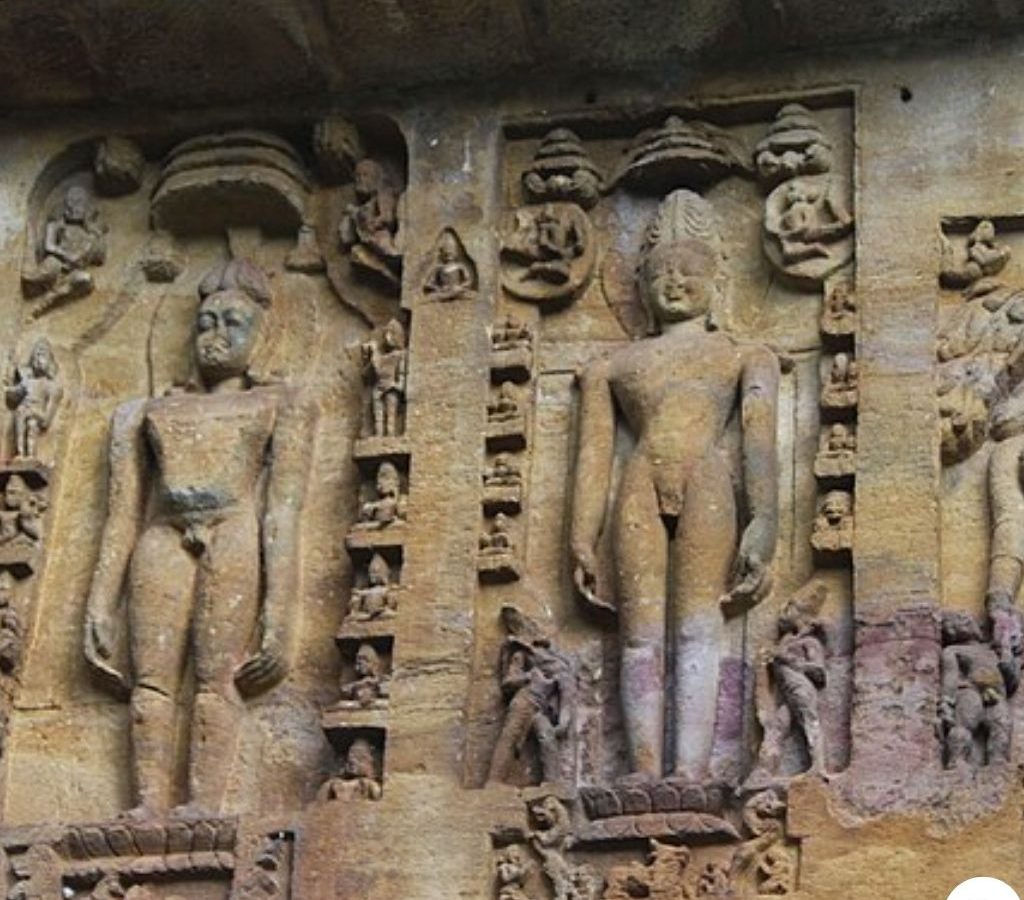
Architecture and Rock-cut Caves
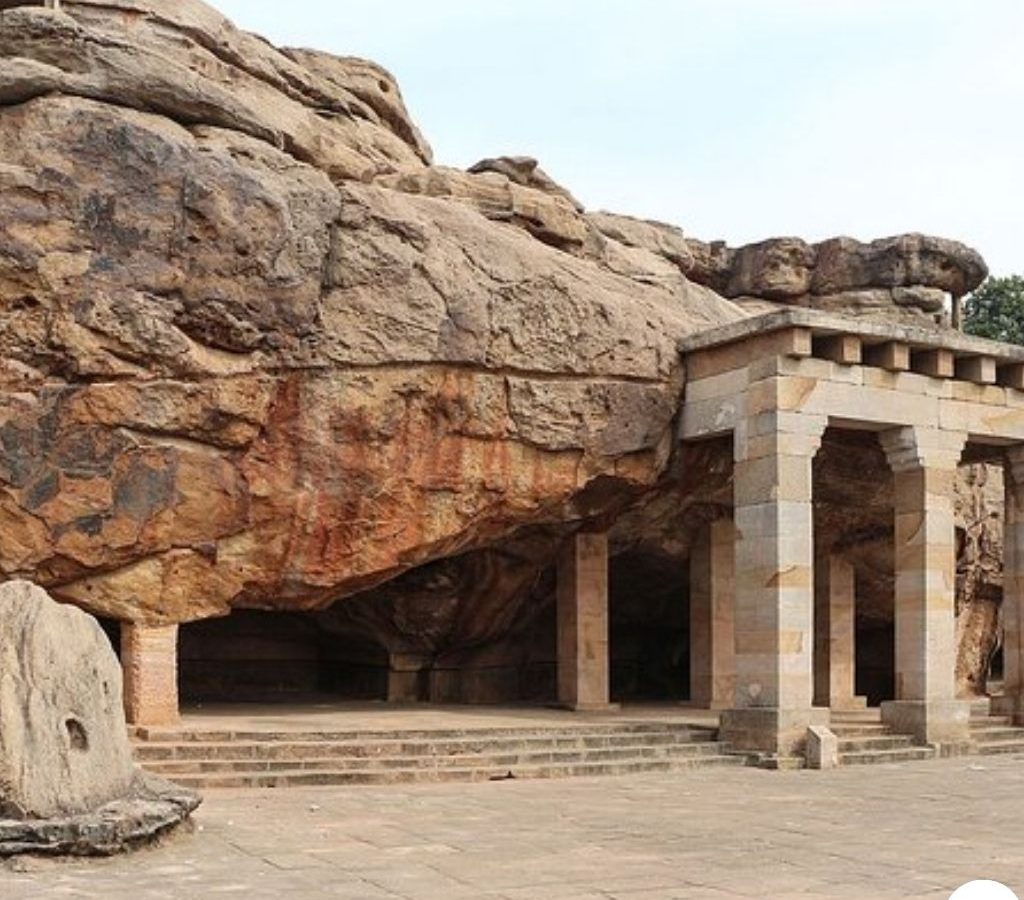
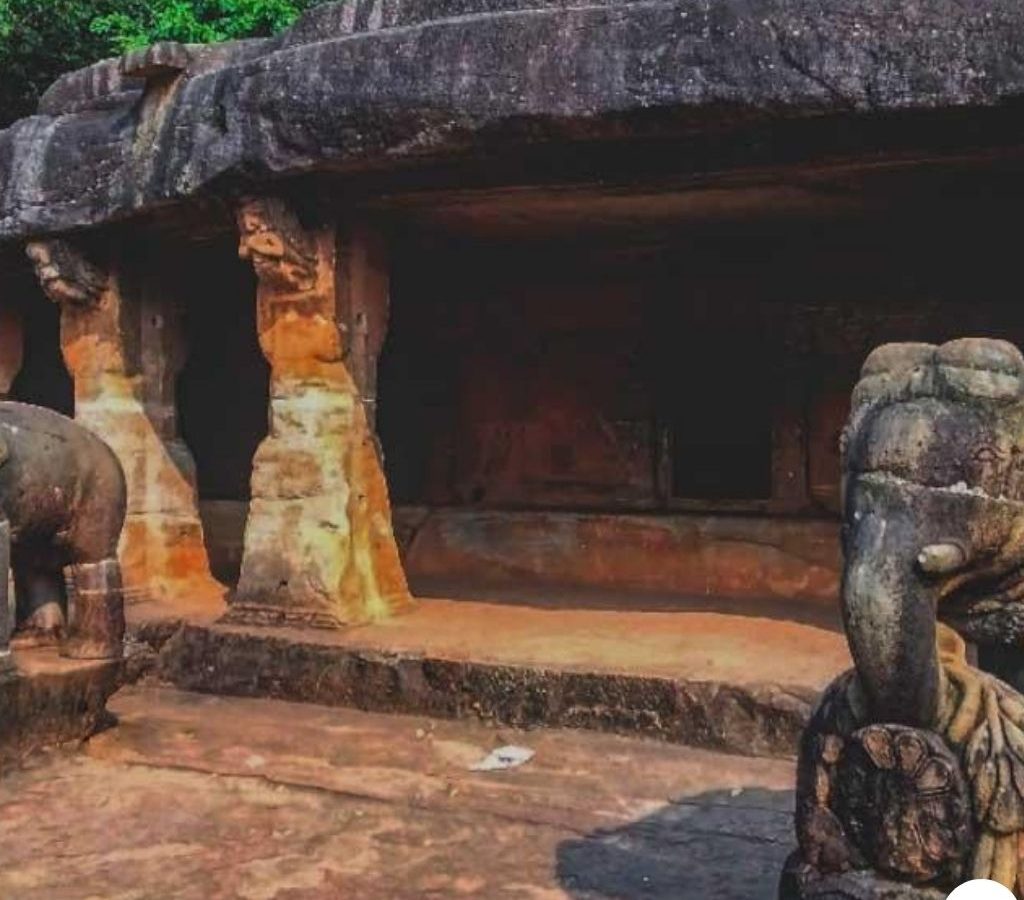
The architecture of Khandagiri represents one of the earliest and finest examples of rock-cut architecture in India, dating back to the 2nd century BCE. The caves on this hill were manually excavated out of laterite rock, characterized by their reddish hue and relatively soft texture, which allowed ancient artisans to carve intricate designs with limited tools.
Khandagiri originally contained fifteen caves, though some have been partially destroyed or eroded over time. Each cave, known locally as a “Gumpha”, served a distinct purpose—primarily as monastic shelters for Jain ascetics, but also for meditation, teaching, and religious discourse.
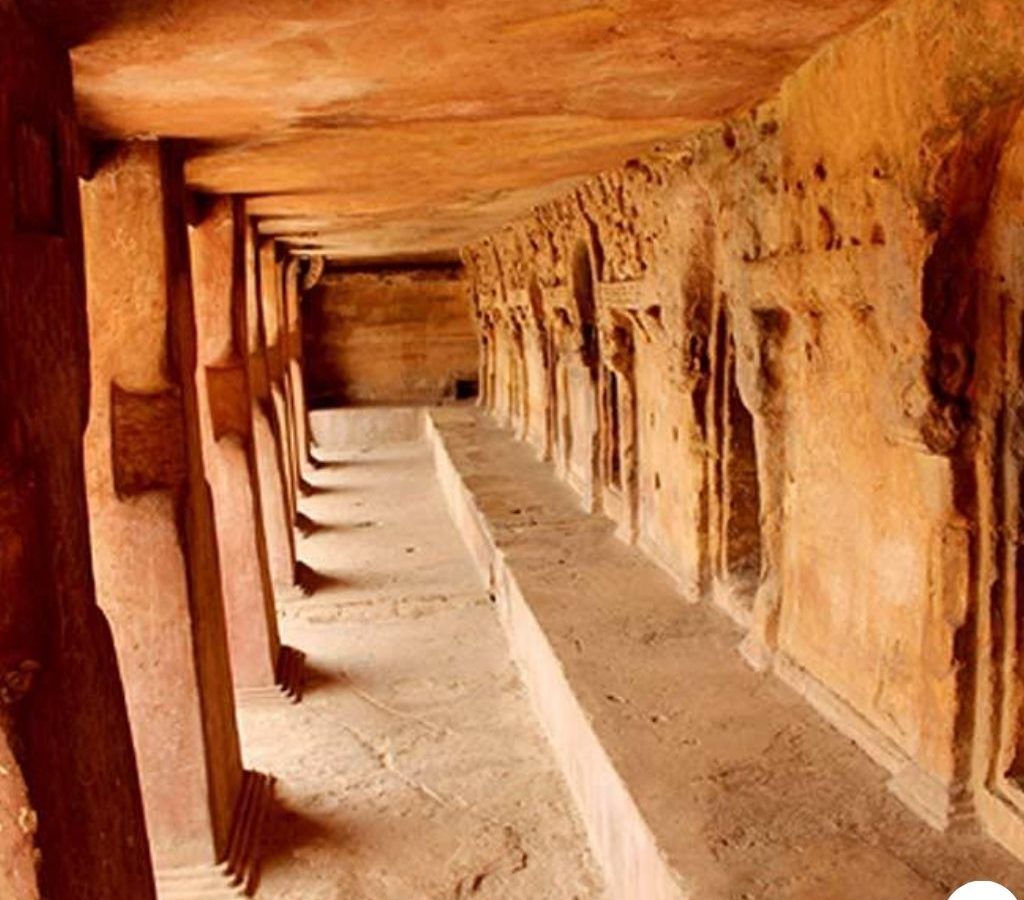
The caves vary in size and complexity—from simple, single-chamber cells to multi-level structures featuring pillared verandas, arched doorways, and decorative façades. Many caves incorporate rock-cut benches and platforms that were likely used for meditation or sleeping.
The architectural style at Khandagiri displays a transition from natural rock shelters to planned cave architecture, marking an evolutionary stage in Indian rock-cut design that predates the later Buddhist caves of Ajanta and Ellora.
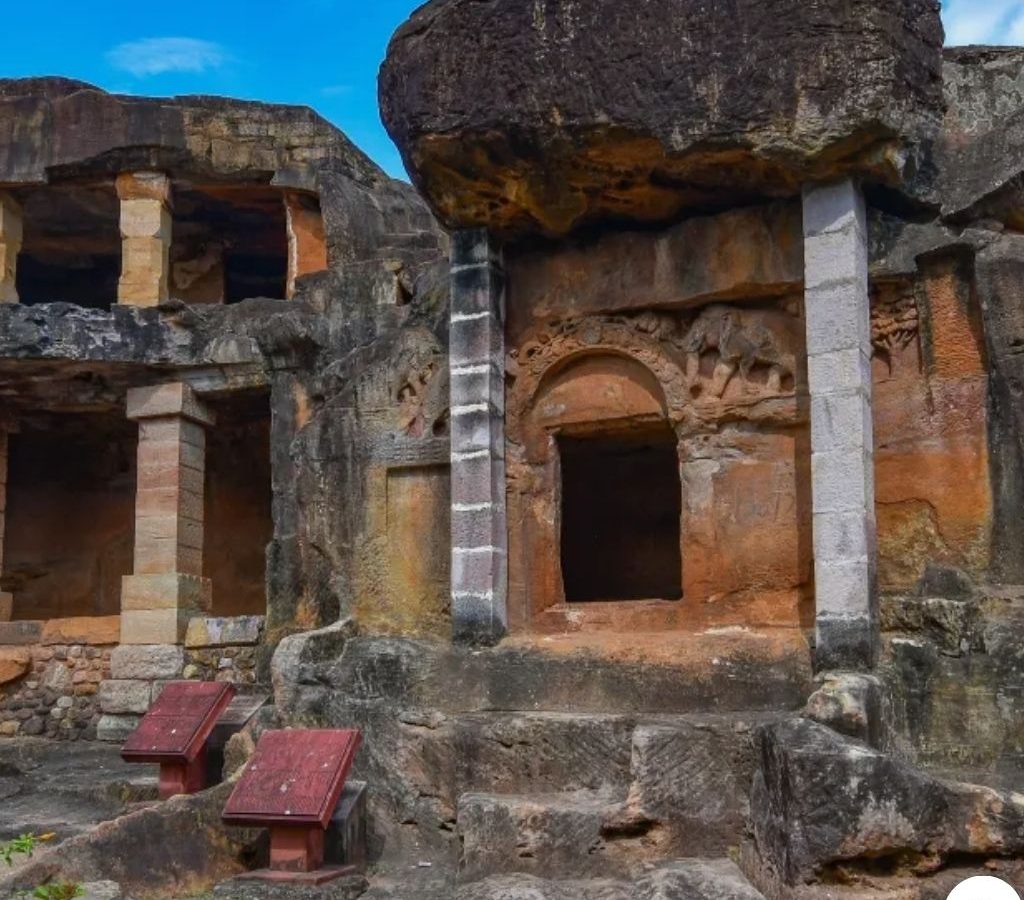
Although less ornate than Udayagiri, several caves at Khandagiri are adorned with sculptural reliefs and symbolic motifs. Common themes include:
- Jain Tirthankaras and monks in meditative postures
- Floral and geometric patterns symbolizing purity and enlightenment
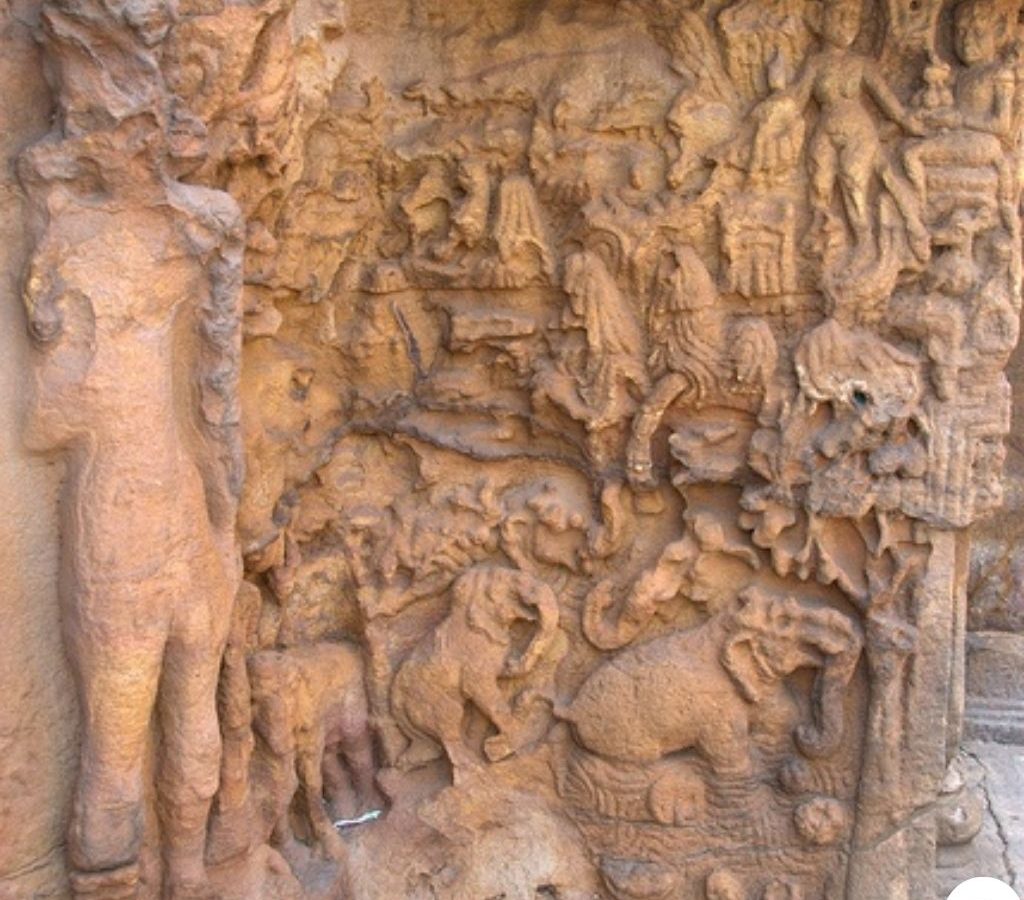
- Animal motifs such as elephants, parrots, and lions, representing strength and vigilance
- Inscriptions in ancient Brahmi script, which provide valuable insights into the socio-religious life of the period
The caves were designed to support the ascetic lifestyle of Jain monks. Their ventilation shafts and narrow entrances minimized sunlight and distractions, creating a tranquil environment for meditation (dhyana). Some caves also include cisterns and water channels, demonstrating early engineering knowledge in rainwater collection.
Overall, the Khandagiri caves stand as a remarkable fusion of spiritual devotion, artistic skill, and architectural innovation, reflecting the ideals of simplicity and self-discipline central to Jain philosophy.
Important Caves in Khandagiri
The Khandagiri Hill houses a series of ancient rock-cut caves, locally known as Gumphas, each with unique architectural and artistic features. These caves were primarily excavated for Jain monks during the reign of King Kharavela in the 2nd century BCE. While several caves have suffered partial damage due to erosion, many still preserve their inscriptions, carvings, and iconography that reveal the rich religious and cultural history of early Odisha.
Below are the most notable caves of Khandagiri Hill:
1. Tatowa Gumpha I & II (Parrot Caves)
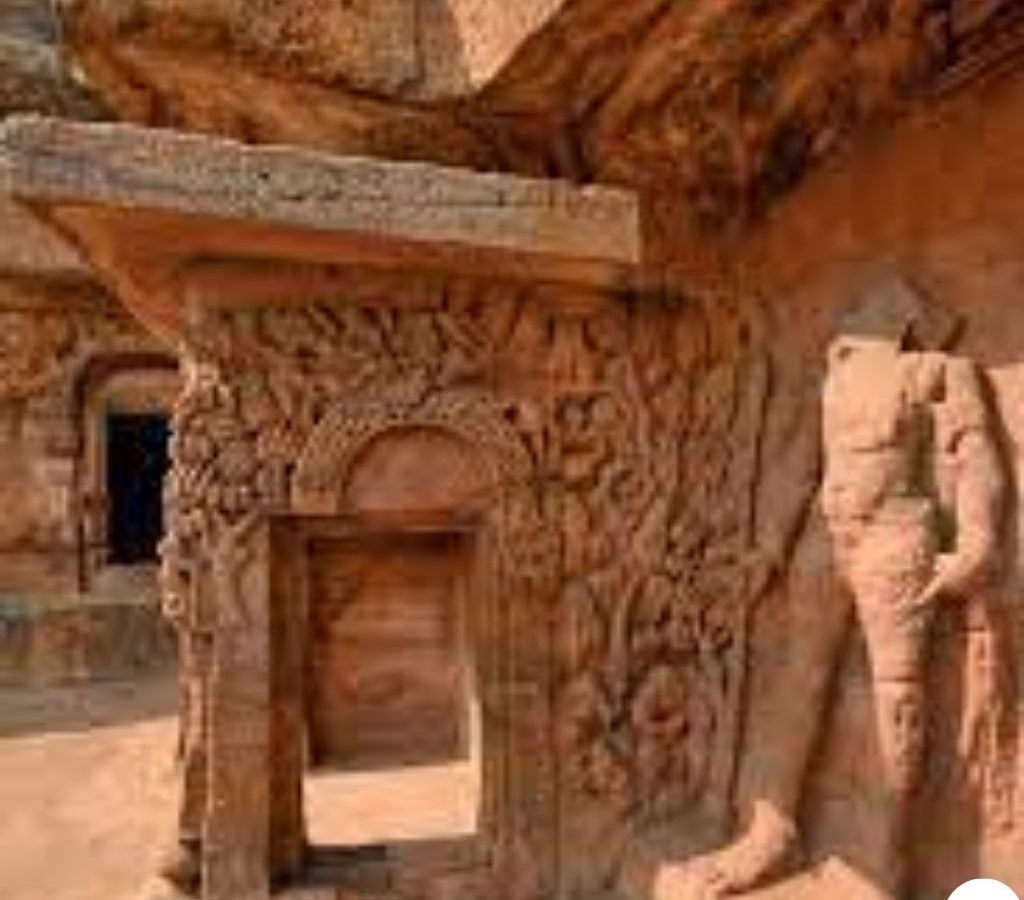
The Tatowa Gumphas, or Parrot Caves, are among the most prominent at Khandagiri. They derive their name from the carved parrots (tatowa) flanking the arches of the cave entrances.
- Tatowa Gumpha I features ornate pillared verandas, with carvings of elephants, birds, and floral patterns.
- Tatowa Gumpha II is slightly larger and more elaborately decorated, containing inscriptions in Brahmi script and sculptures of Jain ascetics.
These caves exemplify the artistic grace and symbolic expression of early Jain rock-cut art.
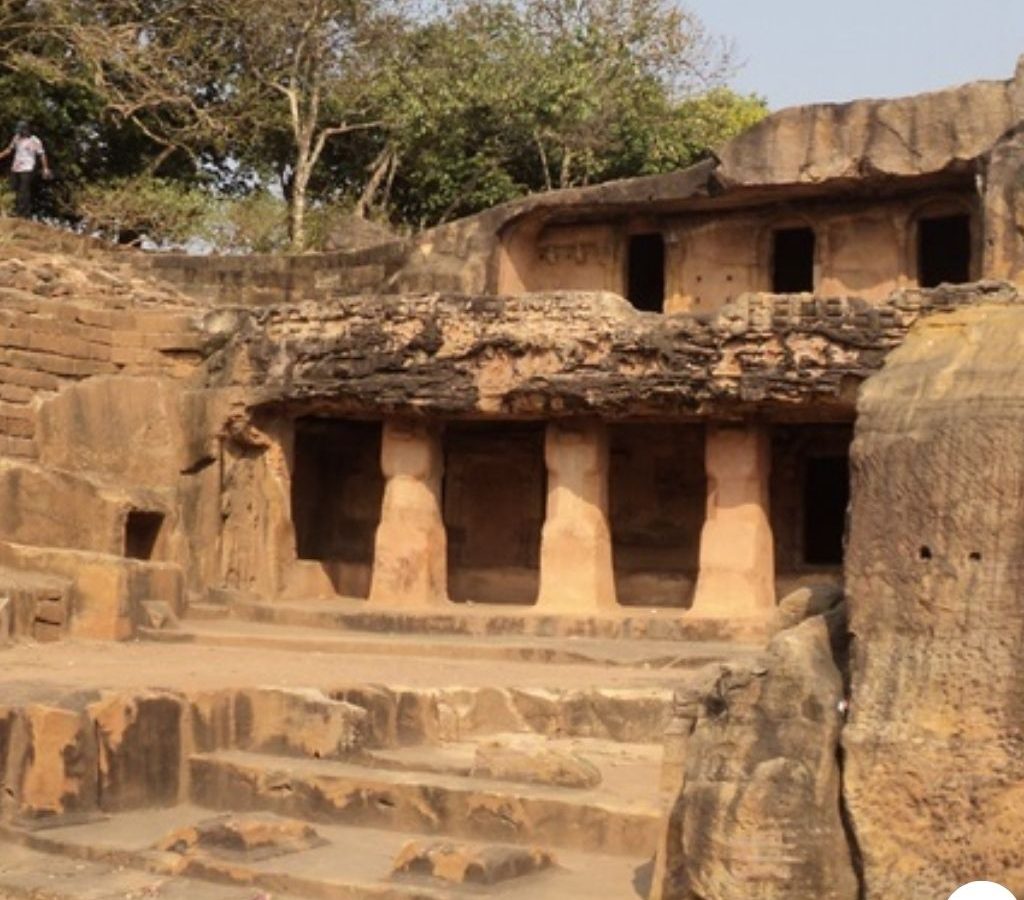
The Ananta Gumpha is famous for its reliefs of Jain Tirthankaras carved into the cave walls. The sculptures depict serene, meditative postures symbolizing spiritual liberation (moksha). The cave also features carvings of lotus motifs and divine attendants, highlighting the deep religious significance of Jain cosmology.
Named after the Tentuli tree (Tamarind) nearby, this cave is noted for its simple yet symmetrical design. It consists of a single cell with a narrow verandah, possibly used for solitary meditation. The lack of ornamentation reflects the austerity and ascetic ideals central to Jain philosophy.
As the name suggests, the Dhyana Gumpha or Meditation Cave was designed for deep spiritual practice. The cave is plain and quiet, providing ideal conditions for Jain monks’ meditation and self-discipline. Its minimalistic design exemplifies the Jain emphasis on inner reflection over external decoration.
The Navamuni Gumpha, or Cave of Nine Monks, features carvings of nine Jain Tirthankaras or monks in meditative poses. The symmetrical arrangement of these figures across the walls signifies the spiritual lineage and reverence for enlightenment within Jainism.
The Barabhuji Gumpha is distinguished by the presence of a twelve-armed female deity, believed to be an early form of Goddess Ambika. The sculptures display intricate craftsmanship, showcasing divine symbolism intertwined with Jain theology.
The Trusula Gumpha (or Trishula Cave) is named after the trident-like symbol (trishula) carved above its entrance. This cave features religious symbols, inscriptions, and Jain motifs, representing the synthesis of artistic expression and spiritual ideology during Kharavela’s reign.
Dedicated to Goddess Ambika, a popular deity in Jain tradition, this cave depicts the goddess seated under a tree, accompanied by a lion and her children. The iconography symbolizes fertility, protection, and spiritual power, offering a glimpse into early Jain goddess worship.
This cave is believed to be a later addition, possibly dating to the medieval period, and is attributed to Lalatendu Keshari, a ruler from the Keshari dynasty. It reflects later influences in style and design, suggesting that Khandagiri continued to be a site of religious importance long after its initial creation.
Together, these caves form a monumental complex that illustrates the evolution of Jain art, architecture, and spirituality in ancient Odisha. Each cave stands as a silent chronicle of ascetic life, devotion, and the artistic achievements of the early Indian subcontinent.
Inscriptions and Epigraphy
The inscriptions and epigraphs found in and around Khandagiri Hill hold immense historical and linguistic significance, providing valuable insights into the political, cultural, and religious history of ancient Kalinga. These inscriptions, primarily engraved on the walls and doorways of the caves, serve as authentic records of the Jain monastic tradition and the patronage of King Kharavela.
Hathigumpha Inscription (Main Reference)
The most renowned epigraph associated with the Khandagiri–Udayagiri complex is the Hathigumpha Inscription, located on the neighboring Udayagiri Hill. Although not directly on Khandagiri, it provides crucial historical context.
- The inscription is composed in Prakrit language, using the Brahmi script, and consists of seventeen lines etched on the cave wall.
- It narrates the life, achievements, and military conquests of King Kharavela, describing his devotion to Jainism and contributions to religion, art, and architecture.
- It mentions the construction and donation of caves for Jain monks, implying that both Udayagiri and Khandagiri were part of a unified monastic complex.
Several smaller inscriptions are found within the caves at Khandagiri, especially in Tatowa Gumpha I & II, Ananta Gumpha, and Trusula Gumpha. These inscriptions:
- Record the names of donors, monks, and patrons, including references to royal officers and lay devotees.
- Use early forms of Brahmi script, providing crucial evidence for the linguistic evolution in Eastern India.
- Contain invocations to Jain Tirthankaras, highlighting the site’s strictly Jain religious character.
The inscriptions are among the earliest written records in Odisha and have been instrumental in understanding:
- The spread of Jainism in the region.
- The administrative structure and social hierarchy during Kharavela’s reign.
- The development of Odia’s proto-linguistic roots from early Prakrit dialects.
Epigraphists such as Alexander Cunningham, B.M. Barua, and D.C. Sircar have studied these inscriptions extensively, confirming their authenticity and historical reliability. The Archaeological Survey of India (ASI) continues to preserve and document them as part of India’s protected cultural heritage.
Religious Significance
The Khandagiri Hill holds immense religious significance as one of the earliest and most revered centers of Jainism in eastern India. Along with its twin hill, Udayagiri, it represents a sacred monastic complex that flourished during the 2nd century BCE, under the patronage of King Kharavela of the Mahameghavahana dynasty.
Center of Jain Monastic Life
Khandagiri served as a residential and spiritual retreat for Jain monks, who lived and meditated in the rock-cut caves. These monks practiced severe asceticism, adhering to the Jain principles of Ahimsa (non-violence), Aparigraha (non-possession), and Satya (truth). The design of the caves—narrow, dimly lit, and devoid of luxury—reflects the ideals of renunciation and inner discipline central to Jain monastic life.
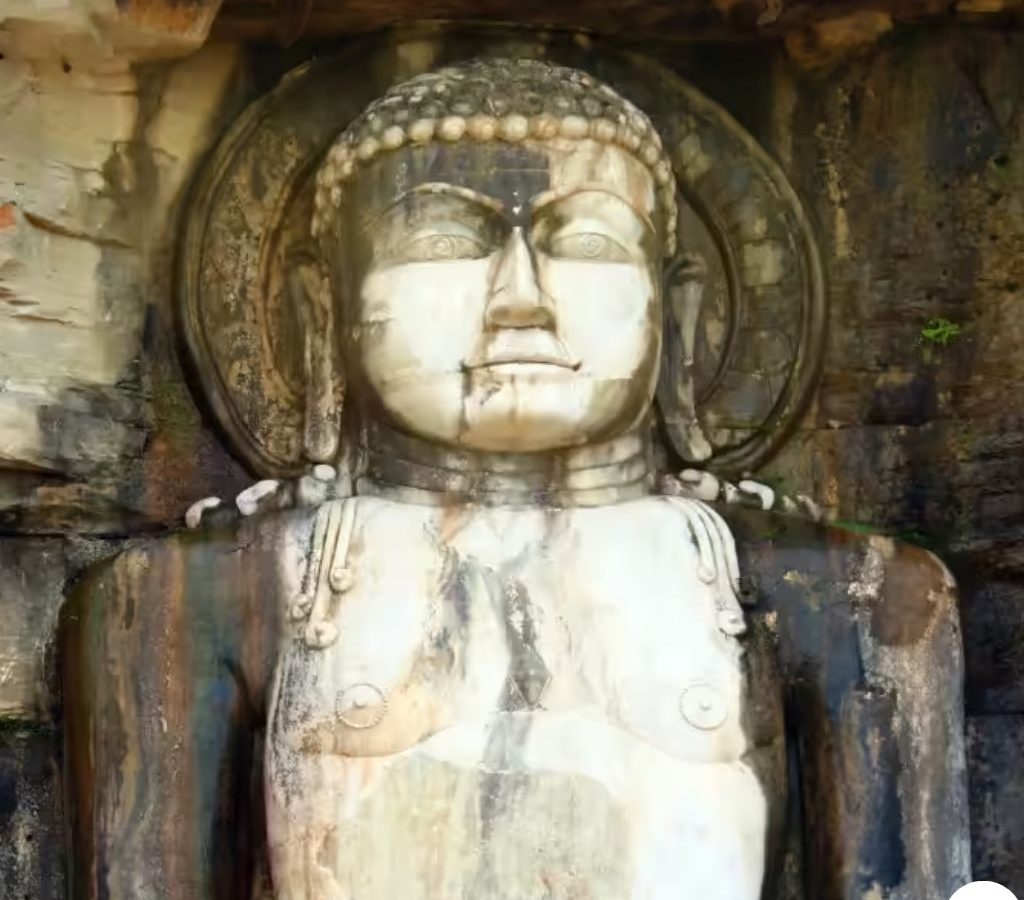
Many caves on Khandagiri bear carvings and reliefs of Jain Tirthankaras, particularly Rishabhanatha (Adinatha), Parshvanatha, and other enlightened beings. These depictions highlight the site’s dedication to Jain teachings and cosmology, symbolizing the soul’s journey toward moksha (liberation).
The presence of Goddess Ambika sculptures, especially in the Ambika Gumpha and Barabhuji Gumpha, also shows the evolution of female divine imagery within Jain devotional art.
Khandagiri continues to be a pilgrimage destination for followers of Jainism. Devotees visit the site to pay homage to the ancient Tirthankara images, meditate in the caves, and participate in ritual ceremonies conducted during major Jain festivals. The annual Khandagiri Mela, organized during Magha Saptami, attracts thousands of pilgrims from Odisha and neighboring states.
Religiously, Khandagiri symbolizes spiritual endurance, enlightenment, and simplicity. Its caves embody the Jain vision of transcending material life through meditation and moral discipline. The site also represents a key stage in the geographical spread of Jainism beyond western and northern India, illustrating its deep roots in the cultural landscape of ancient Kalinga.
Even today, the tranquil environment and historical aura of Khandagiri continue to inspire spiritual seekers, making it a living monument of Jain faith, philosophy, and perseverance.
Art and Iconography
The art and iconography of Khandagiri form a vital part of early Indian rock-cut artistic tradition, representing the aesthetic and spiritual vision of Jain culture during the 2nd century BCE. The sculptures, reliefs, and motifs found within the caves demonstrate the evolution of religious symbolism, craftsmanship, and visual storytelling in ancient Odisha.
Artistic Characteristics
The artistic style of Khandagiri is marked by simplicity, spiritual expression, and symbolic detail rather than ornamental excess. The carvings were made directly into laterite rock, which limited the fineness of detail but enhanced the raw and natural appeal of the compositions.
The caves feature arched doorways, pillars, and façades decorated with motifs inspired by nature and religion, such as:
- Elephants and lions, symbolizing power and vigilance
- Birds (especially parrots), representing wisdom and ascetic freedom
Lotus flowers and vines, denoting purity and spiritual awakening
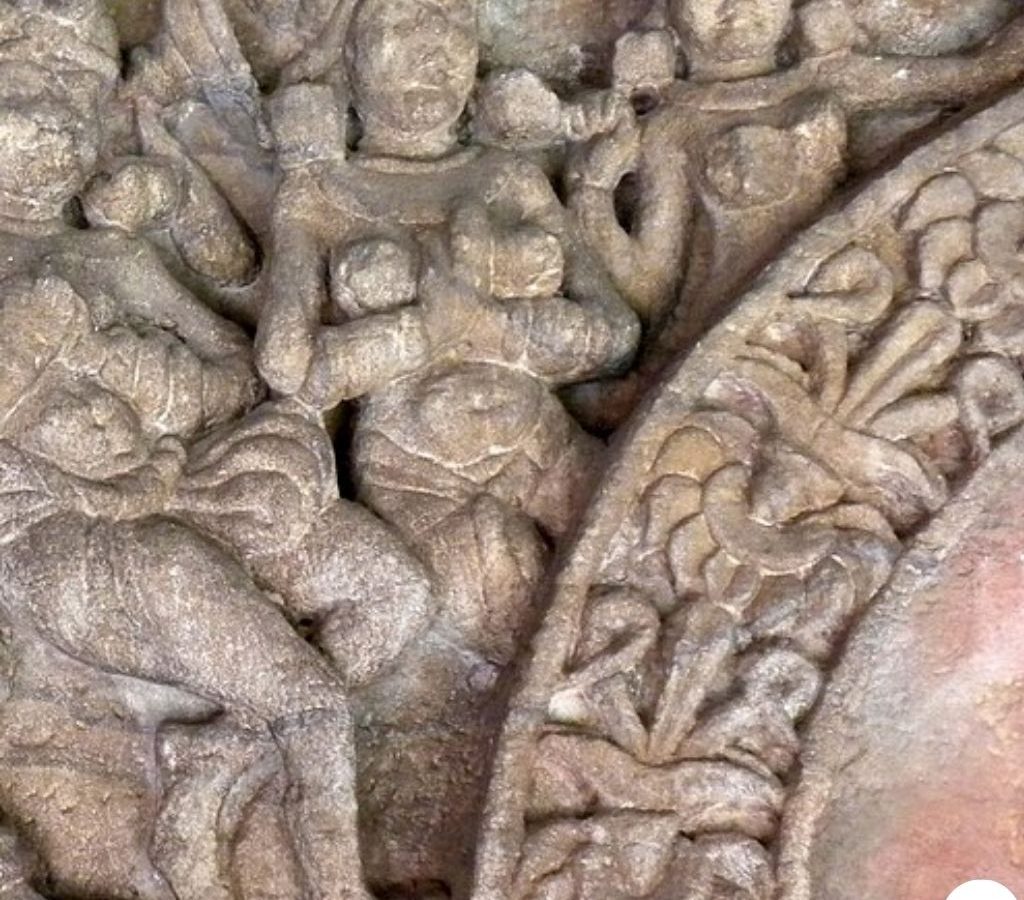
The caves prominently display reliefs of Jain Tirthankaras, particularly in meditative or standing postures known as Kayotsarga and Padmasana. These figures are depicted with serene expressions, closed eyes, and minimal ornamentation, signifying detachment and enlightenment.
Some caves, such as the Ananta Gumpha and Navamuni Gumpha, feature multiple Tirthankaras carved in sequence, symbolizing the continuity of spiritual lineage and the Jain ideal of Ahimsa (non-violence) and Aparigraha (renunciation).
The decorative elements of Khandagiri also reflect broader mythological and ethical themes. Common motifs include:
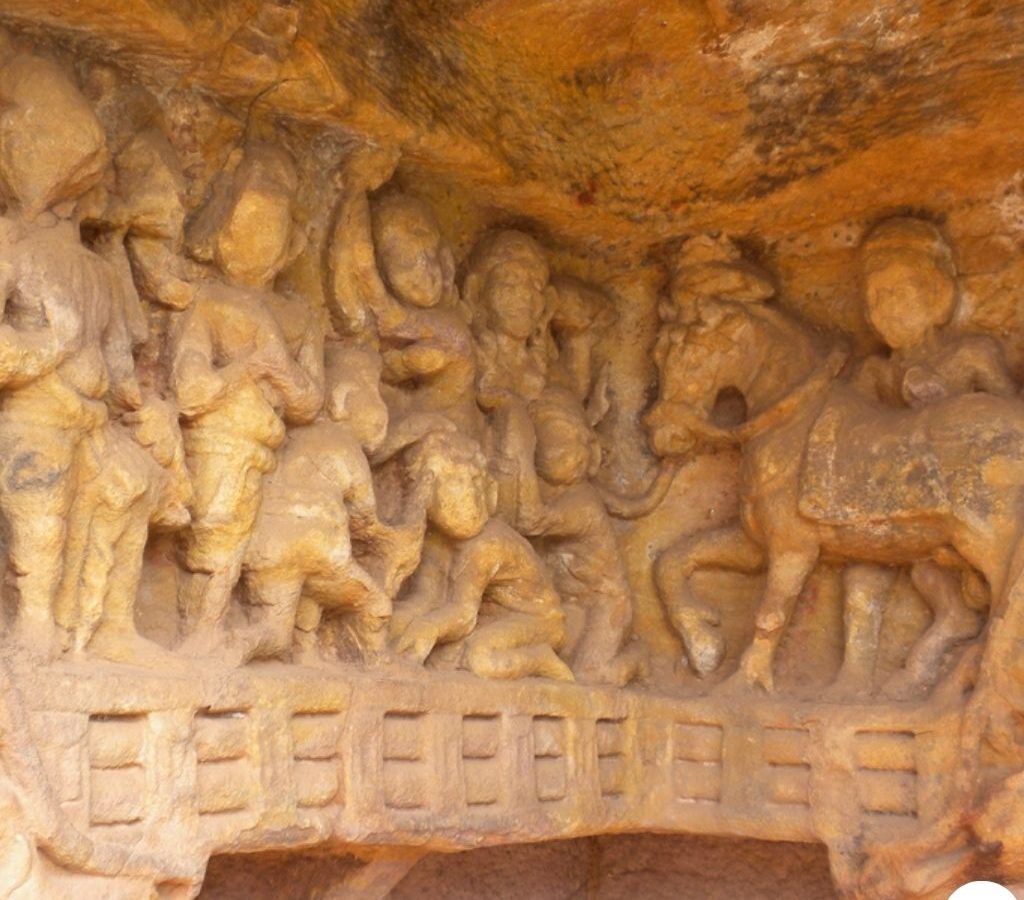
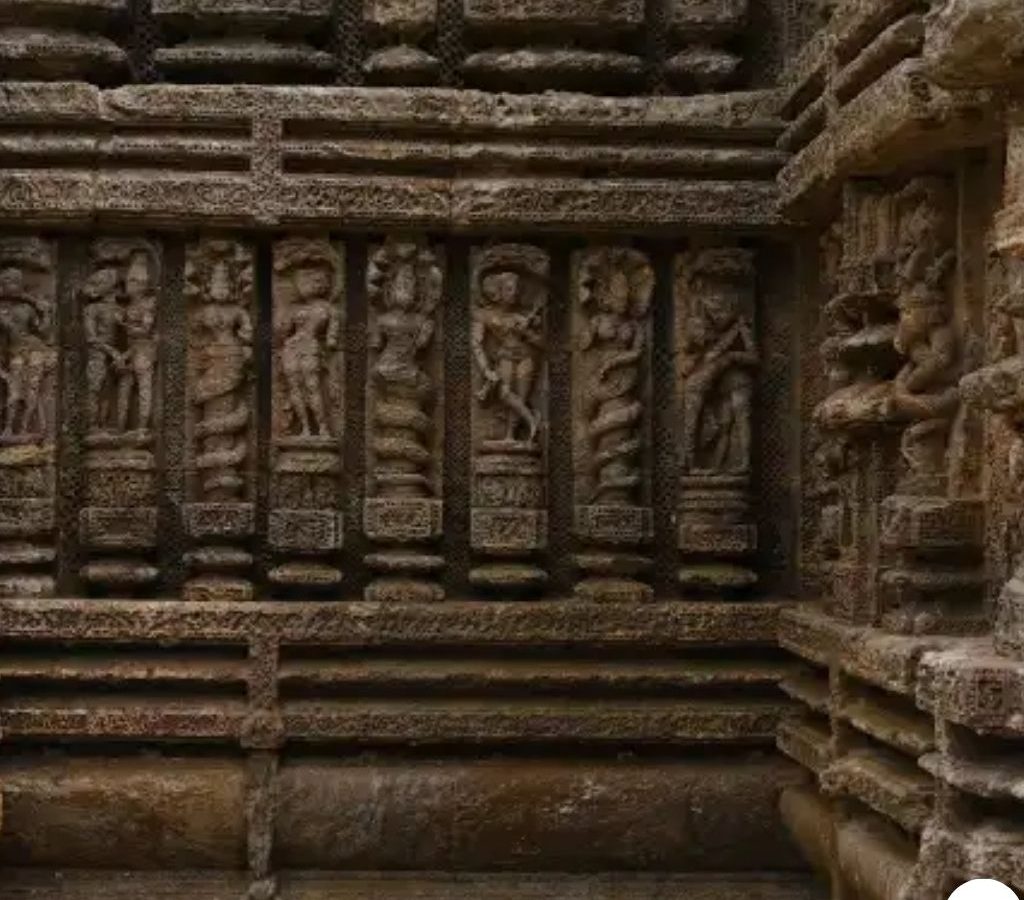
- Royal processions and dancers, possibly illustrating King Kharavela’s patronage of the arts
- Animals and floral patterns, connecting spiritual purity to nature
- Guardians and attendants, representing protection of the sacred space
Although many sculptures have suffered erosion over time, traces of early painting and polishing can still be seen in certain caves, suggesting that the interiors may once have been brightly colored.
The art of Khandagiri influenced later Jain and Buddhist cave traditions, including those at Udayagiri (Odisha), Ellora (Maharashtra), and Khandagiri’s medieval successors in western India.
Its iconography reflects an early phase of Indian narrative relief sculpture, where devotional themes were blended with everyday imagery to communicate moral and spiritual values.
Today, the carvings of Khandagiri are regarded as a precursor to classical Indian sculpture, bridging the gap between Mauryan artistic ideals and the Gupta period aesthetic refinement that followed centuries later.
Archaeological Studies
The archaeological studies of Khandagiri Hill have played a crucial role in understanding the early history of Indian rock-cut architecture, as well as the spread of Jainism in eastern India. Together with Udayagiri Hill, it forms one of the most thoroughly examined archaeological complexes in Odisha, attracting the attention of historians, epigraphists, and conservationists since the 19th century.
Early Surveys and Discoveries
The first systematic documentation of Khandagiri and Udayagiri was carried out by British archaeologists during the colonial period. Scholars such as Alexander Cunningham, James Fergusson, and Major Kittoe recorded inscriptions, plans, and sketches of the caves, noting their architectural and historical uniqueness.
Later, Indian scholars like R.D. Banerji, D.C. Sircar, and B.M. Barua contributed detailed research on the Hathigumpha inscription and the Jain monastic layout of the complex. Their studies established that the caves date back to the 2nd century BCE, during the reign of King Kharavela of the Mahameghavahana dynasty.
Although no large-scale excavation was conducted, surface studies and limited archaeological interventions by the Archaeological Survey of India (ASI) have revealed:
- Ancient water cisterns and drainage systems carved into the rock, indicating advanced engineering skills.
- Fragments of pottery, terracotta beads, and stone tools, confirming the habitation of Jain monks and visitors.
- Remnants of inscriptions and symbols that help reconstruct the chronology of the site and its multiple phases of occupation.
The epigraphical evidence collected from Khandagiri provides key insights into:
- The language and script development from Prakrit to early Odia.
- The socio-political structure of Kalinga under King Kharavela.
- The religious syncretism between Jainism and local Odia traditions.
The artistic and architectural study of Khandagiri has also contributed to identifying it as a transitional phase between natural rock shelters and later elaborate monastic cave complexes such as Ajanta, Ellora, and Badami.
The Archaeological Survey of India (ASI) currently manages and protects the Khandagiri–Udayagiri complex as a centrally protected monument. The ASI conducts regular surveys, digital mapping, and 3D documentation to preserve deteriorating carvings and inscriptions.
In recent years, non-invasive archaeological technologies like LiDAR scanning and photogrammetry have been introduced to study erosion patterns and structural stability. Collaborative research projects with universities and cultural organizations continue to explore the cultural evolution, art history, and conservation techniques of the site.
Khandagiri thus remains not only a monument of the past but also a living archaeological laboratory, offering invaluable insight into ancient Indian art, architecture, and religious life.
Tourism
The Khandagiri and Udayagiri Caves are among the most visited heritage destinations in Bhubaneswar, Odisha. Their blend of ancient history, art, spirituality, and scenic beauty attracts not only history enthusiasts and archaeologists but also tourists, pilgrims, and photographers from across India and abroad.
Visitor Experience
Located about 6 km west of Bhubaneswar city centre, Khandagiri Hill offers visitors an immersive experience of Odisha’s ancient Jain heritage. The site is easily accessible via well-connected roads and public transport, with local guides available at the entrance.
Visitors often explore both hills together — Udayagiri for its well-preserved carvings and inscriptions, and Khandagiri for its serene, panoramic hilltop views and Jain shrines.
From the summit, visitors can enjoy a sweeping view of Bhubaneswar city, especially beautiful during sunrise and sunset.
Popular attractions on Khandagiri Hill include:
Noted for its parrot carvings and symbolic motifs.
Famous for delicate reliefs depicting Jain monks and divine figures.
Recognized for the twelve-armed goddess relief.
Contains carvings related to Jain yakshinis.
Associated with medieval restoration work.
The Archaeological Survey of India (ASI) manages both hills as centrally protected monuments, with fixed visiting hours.
- Timings: 8:00 AM – 5:00 PM (daily)
- Entry Fee: ₹25 for Indian nationals; ₹300 for foreign tourists (subject to ASI norms)
- Best Time to Visit: October to February (cooler months offering pleasant weather for exploration).
Photography and videography are allowed within limits, and visitors are advised to respect the religious sanctity of the Jain shrines.
Khandagiri continues to be a pilgrimage site for the Jain community, especially during the annual Mahavir Jayanti festival, when thousands of devotees gather to offer prayers and participate in processions. The site also serves as a spiritual retreat, attracting seekers and meditators drawn to its tranquil atmosphere.
Nearby attractions include:
- Udayagiri Caves (1 km away)
- Khandagiri Jain Temple atop the hill
- Dhauli Shanti Stupa (about 10 km away)
- Lingaraj Temple and Rajarani Temple in Bhubaneswar
The Odisha Tourism Department has developed several facilities for visitors:
- Parking areas, rest shelters, and drinking water points
- Signboards in English, Hindi, and Odia
- Small eateries and souvenir shops near the entrance
- Public restrooms maintained by ASI
For tourists seeking extended stays, numerous hotels and lodges are available in Bhubaneswar, catering to all budgets — from government-run guesthouses to luxury hotels.
- Wear comfortable footwear suitable for climbing uneven rock steps.
- Carry water and sun protection during summer months.
- Early mornings or late afternoons are ideal for photography and exploring comfortably.
- Hiring a local guide enhances the understanding of the site’s historical and religious background.
Preservation and Conservation
The Khandagiri Caves, along with the adjacent Udayagiri Caves, are protected as Monuments of National Importance by the Archaeological Survey of India (ASI) under the Ancient Monuments and Archaeological Sites and Remains Act, 1958. These ancient rock-cut structures, over two millennia old, require continuous care to preserve their fragile carvings, inscriptions, and natural rock surfaces from environmental and human-induced damage.
Structural Conservation
Over centuries, natural erosion, weathering, and biological growth have weakened the soft laterite rock used in carving the caves. The ASI has implemented several measures to ensure the structural stability of the caves, including:
- Chemical cleaning and desalinization of walls to remove algae, moss, and lichen.
- Reinforcement of weakened rock surfaces using lime-based mortars compatible with the original material.
- Stabilization of cracks and joints to prevent water seepage during monsoons.
- Controlled drainage systems to channel rainwater away from cave entrances and inscriptions.
Many caves at Khandagiri bear Brahmi inscriptions and religious carvings that are vulnerable to fading and vandalism. To safeguard these:
- Protective barriers and glass covers have been installed around delicate panels.
- Signboards and replicas are provided for public viewing to reduce physical contact with original carvings.
- Advanced documentation using 3D laser scanning and digital photography has been initiated to create permanent digital archives of inscriptions and reliefs.
Tourism, while beneficial for awareness and revenue, poses threats such as littering, graffiti, and physical wear on cave floors and steps. The ASI, in collaboration with the Odisha State Department of Culture and Tourism, has taken initiatives to manage these challenges:
- Establishing visitor pathways to minimize foot traffic on vulnerable rock surfaces.
- Installing surveillance cameras and guards to deter vandalism.
- Conducting cleanliness drives and awareness campaigns about responsible tourism.
- Restricting the use of chemical cleaning agents to protect the natural patina of the rock.
In recent years, ASI has partnered with academic institutions and heritage conservation agencies to study the caves’ geology, iconography, and environmental conditions. Research focuses on climate impacts, water damage, and microbiological growth affecting the stone surface.
Pilot projects using eco-friendly consolidants and nanomaterials are being tested to improve long-term preservation.
Despite ongoing efforts, Khandagiri faces persistent challenges such as:
- Rapid urban expansion of Bhubaneswar, leading to air pollution and vibrations.
- Encroachment pressures near the foothills.
- Visitor overload during festival seasons, which stresses the fragile pathways.
The ASI and local authorities are working toward a comprehensive conservation management plan (CMP) integrating heritage preservation, community participation, and sustainable tourism to ensure the long-term survival of this invaluable Jain monument complex.
Accessibility and Connectivity
The Khandagiri Caves, situated on the western outskirts of Bhubaneswar, are easily accessible from various parts of Odisha and India through a well-developed network of roads, railways, and air routes. Their proximity to the state capital makes them one of the most conveniently reachable heritage sites in Eastern India.
Geographical Coordinates
- Location: Khandagiri Hill, Bhubaneswar, Odisha, India
- Coordinates: Approximately 20.243°N latitude and 85.761°E longitude
- Elevation: Around 118 meters (387 feet) above sea level
The caves are located just opposite the Udayagiri Hill, separated by a narrow road, forming a twin archaeological and religious complex.
Khandagiri is well connected by NH-16 (National Highway 16), which links Bhubaneswar to major cities like Cuttack, Puri, and Berhampur.
- Distance from Bhubaneswar city centre: ~6 km
- From Biju Patnaik International Airport: ~8 km
- From Bhubaneswar Railway Station: ~9 km
Regular auto-rickshaws, taxis, and city buses operate between Khandagiri and prominent landmarks in Bhubaneswar. The site also features a designated tourist parking area near the entrance for private vehicles and tourist buses.
The Bhubaneswar Railway Station serves as the nearest major railhead, connected to all major Indian cities such as Delhi, Kolkata, Mumbai, Chennai, and Hyderabad.
Visitors arriving by train can reach Khandagiri via local transport in approximately 20–25 minutes.
The Lingaraj Temple Road Station, a smaller halt, also lies within convenient distance for local travelers.
The Biju Patnaik International Airport (BBI) in Bhubaneswar, located about 20 minutes’ drive from Khandagiri, provides both domestic and limited international connectivity.
Major airlines operate daily flights to and from Delhi, Kolkata, Bengaluru, Chennai, Mumbai, and Hyderabad, as well as occasional international routes to Bangkok and Kuala Lumpur.
Car rentals and prepaid taxi services are readily available at the airport for visitors heading to Khandagiri.
The Odisha State Road Transport Corporation (OSRTC) and Mo Bus (Bhubaneswar Smart City Transit System) operate frequent bus services connecting:
- Khandagiri Square
- Jaydev Vihar
- Master Canteen (City Centre)
- Airport and Railway Station
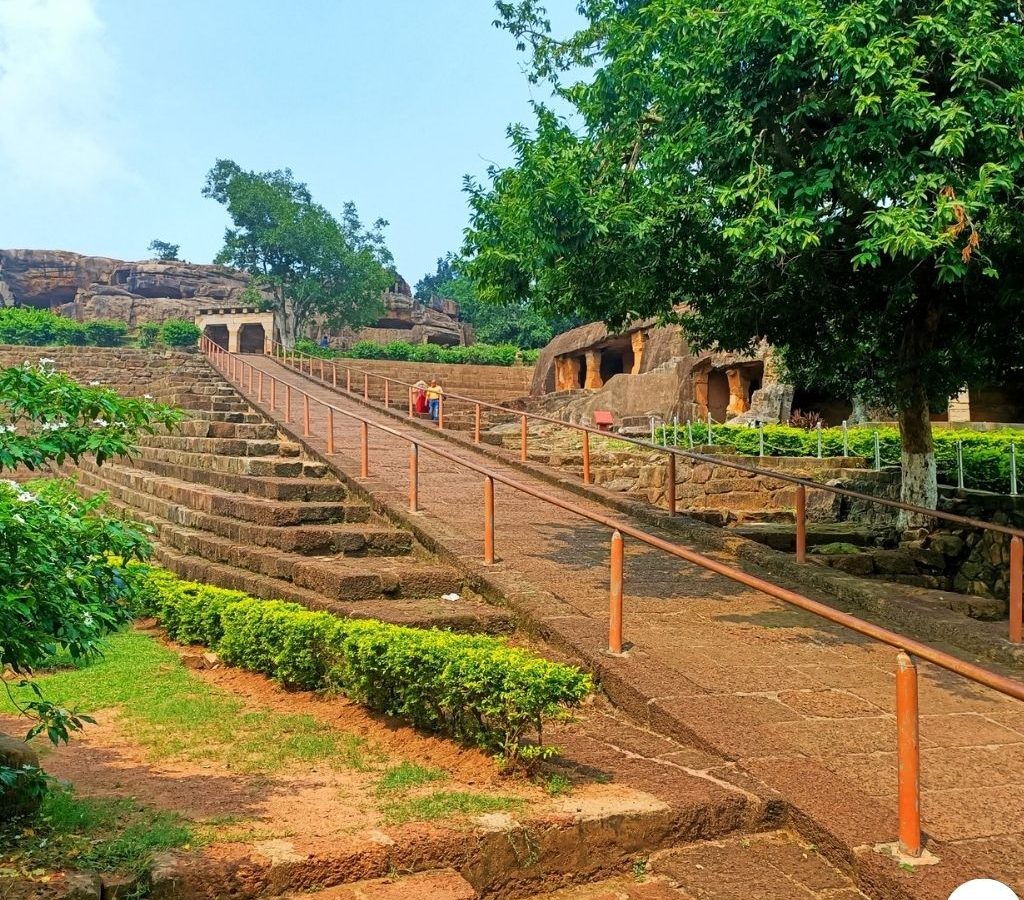
The nearest major stop is Khandagiri Square, from where the caves are a short 5–10 minute uphill walk.
While the caves themselves are located on a hill requiring moderate climbing, paved pathways and railings have been added for safety.
However, wheelchair access is limited to the lower sections due to uneven terrain and ancient rock steps. The ASI and state tourism department are exploring visitor-friendly accessibility upgrades without disturbing the site’s archaeological integrity.
The Khandagiri Caves are surrounded by several notable sites within short driving distance:
- Udayagiri Caves – 0.5 km
- Dhauligiri Shanti Stupa – 10 km
- Lingaraj Temple – 8 km
- Odisha State Museum – 7 km
- Nandankanan Zoological Park – 20 km
In summary, Khandagiri’s excellent connectivity, combined with Bhubaneswar’s robust infrastructure and hospitality facilities, makes it a prime heritage tourism destination for both domestic and international visitors.
Festivals and Events
The Khandagiri Caves hold deep spiritual and cultural importance for the Jain community, and several religious festivals, rituals, and cultural gatherings are observed here throughout the year. These events not only commemorate ancient traditions but also help preserve the living heritage of Jainism in Odisha.
Mahavir Jayanti
The most significant celebration associated with Khandagiri is Mahavir Jayanti, the birth anniversary of Lord Mahavira, the 24th Tirthankara of Jainism.
- When Celebrated: Usually in March or April, depending on the lunar calendar.
- Activities:
- Early morning processions carrying idols of Lord Mahavira from local Jain temples to the hilltop shrine.
- Chanting of Jain prayers (stavans), distribution of prasad, and community feasts (ahimsa bhojan).
- Discourses by Jain monks and scholars on the teachings of non-violence, truth, and self-restraint.
- Decorative lighting and floral adornments around the caves and Jain temple.
During this time, Khandagiri becomes a major pilgrimage center, attracting thousands of devotees from Odisha, Gujarat, Rajasthan, and Karnataka.
Another important Jain festival observed at Khandagiri is Paryushan Parva, a period of intense prayer, fasting, and self-purification.
- Duration: Eight to ten days, typically in August or September.
- Significance: Marks the renewal of spiritual discipline and forgiveness (Kshamavani).
Monks and devotees gather in and around the caves for meditation sessions and scripture recitations, reviving the ancient ascetic practices once performed here.
Coinciding with Mahavir Jayanti, the Khandagiri Mela is a popular annual fair organized at the foothills of Khandagiri and Udayagiri.
- Duration: Around 10 days.
- Highlights:
- Numerous stalls selling handicrafts, traditional sweets, and local delicacies.
- Folk music and dance performances representing Odishan culture.
- Art exhibitions showcasing Jain-inspired paintings and sculptures.
- Cultural programs organized by the Odisha Tourism Department to promote regional heritage.
The fair is not purely religious but also serves as a community festival, drawing both locals and tourists. It reflects the harmonious blend of spiritual devotion and cultural celebration.
- Ayambil Oli: A biannual Jain fasting ritual observed by monks and lay followers, emphasizing simplicity in diet and thought.
- Diwali (Jain New Year): Celebrated by lighting lamps and offering prayers to commemorate Lord Mahavira’s attainment of Nirvana.
- Annual Heritage Walks: Organized by the Odisha State Museum and INTACH Bhubaneswar Chapter, these walks aim to raise awareness about the caves’ history, architecture, and conservation.
During festivals, temporary facilities such as parking zones, first-aid centers, and food stalls are established to accommodate the large influx of visitors. The events contribute significantly to the local economy, supporting small vendors, artisans, and guides.
The state government ensures security arrangements and crowd management, preserving the sanctity of the site while encouraging responsible tourism.
In essence, the festivals and events at Khandagiri represent the living continuity of Jain traditions, transforming this ancient archaeological site into a vibrant space of faith, culture, and community spirit.
In Popular Culture
The Khandagiri Caves, along with their twin hill Udayagiri, have transcended their historical and religious significance to become prominent symbols of Odisha’s cultural identity. Their striking rock-cut architecture, scenic setting, and spiritual aura have made them recurring subjects in art, literature, documentaries, and visual media.
Representation in Art and Literature
Khandagiri has inspired numerous writers, poets, and historians, both ancient and modern.
- Early references appear in Jain canonical texts and inscriptions from the time of King Kharavela, describing the caves as sacred retreats for monks and ascetics.
- In modern Odia literature, several authors and poets have evoked Khandagiri as a symbol of enlightenment, asceticism, and cultural continuity.
- Local artists and sculptors often replicate the Tatowa Gumpha motifs and reliefs of Jain Tirthankaras in their works, showcasing the site’s influence on Odishan visual arts.
The scenic beauty of Khandagiri Hill has attracted filmmakers and documentary producers, particularly for historical and travel-themed productions.
- The caves have featured in several Odia-language films as backdrops for cultural or spiritual sequences.
- Doordarshan and Odisha Tourism have produced documentaries and travel features highlighting the twin hills’ architectural grandeur and religious importance.
- Short films and YouTube travel series frequently showcase sunrise and aerial drone shots of the hills, emphasizing their archaeological appeal and panoramic views of Bhubaneswar.
The Odisha Tourism Department prominently features Khandagiri and Udayagiri in its “Ekamra Kshetra Heritage Circuit”, along with Lingaraj Temple, Mukteshwar Temple, and Dhauli.
Promotional campaigns, brochures, and official videos often use images of the Khandagiri façade as a symbol of Bhubaneswar’s identity as the “Temple City of India.”
In recent years, the site has appeared in:
- Travel documentaries aired on channels like National Geographic India and DD Bharati.
- Photography exhibitions and heritage campaigns showcasing Odisha’s ancient Jain legacy.
With the rise of digital platforms, Khandagiri has gained renewed attention among bloggers, travel influencers, and history enthusiasts.
- Numerous travel blogs, vlogs, and social media posts document the caves’ carvings, inscriptions, and panoramic hilltop views.
- Educational YouTube channels and heritage websites frequently feature virtual tours and 3D reconstructions, bringing the site’s history to global audiences.
- The location has also become popular among photographers and students of architecture for academic and creative projects.
Beyond media appearances, Khandagiri remains a living cultural symbol of Odisha’s ancient tolerance and artistic excellence. It embodies the Jain ideals of peace, discipline, and spiritual liberation, and continues to inspire cultural events, meditation retreats, and heritage festivals in the region.
In summary, Khandagiri’s enduring presence in art, cinema, tourism, and digital culture underscores its transformation from an ancient ascetic retreat into a modern icon of Odisha’s historical and spiritual legacy.
See Also
The following related topics provide additional context and information about the historical, religious, and cultural background associated with the Khandagiri Caves:
Related Archaeological and Historical Sites
- Udayagiri Caves – The twin hill complex facing Khandagiri, noted for its detailed sculptures and inscriptions of King Kharavela.
- Dhauligiri Shanti Stupa – A Buddhist monument near Bhubaneswar symbolizing peace and Emperor Ashoka’s transformation after the Kalinga War.
- Lingaraj Temple – A major Shaivite temple in Bhubaneswar showcasing Kalinga architecture.
- Mukteshwar Temple – Known for its exquisite carvings and considered a gem of Odishan temple art.
- Ratnagiri, Lalitgiri, and Udayagiri (Buddhist Complexes) – Part of the Diamond Triangle of Odisha, reflecting parallel developments in Buddhist monastic architecture.
- Jainism in Odisha – Overview of the history, spread, and influence of Jainism in ancient Kalinga.
- Lord Mahavira – The 24th Tirthankara of Jainism, whose teachings inspired the ascetics who inhabited Khandagiri.
- King Kharavela – Ruler of Kalinga, patron of Jainism, and commissioner of the cave excavations during the 2nd century BCE.
- Hathigumpha Inscription – The most famous inscription at Udayagiri, recording King Kharavela’s achievements and reign.
- Bhubaneswar – The capital of Odisha, often called the Temple City of India, known for its cluster of ancient religious monuments.
- Odisha Tourism – The government body responsible for the preservation and promotion of Odisha’s heritage sites.
- ASI (Archaeological Survey of India) – National agency managing the conservation of the Khandagiri and Udayagiri Caves.
- Ekamra Kshetra Heritage Project – A cultural preservation initiative integrating Bhubaneswar’s major historical sites.
- Rock-cut Architecture in India – A survey of ancient Indian rock-cut monuments including Ajanta, Ellora, and Barabar Caves.
- Ancient Indian Inscriptions – Study of early epigraphic records including Brahmi script found at Khandagiri and Udayagiri.
Kalinga Empire – The ancient kingdom that encompassed present-day Odisha, renowned for its maritime power and cultural advancements.