
Udayagiri and Khandagiri Caves
A Complete Travel & History Guide to Odisha’s Twin Heritage Hills
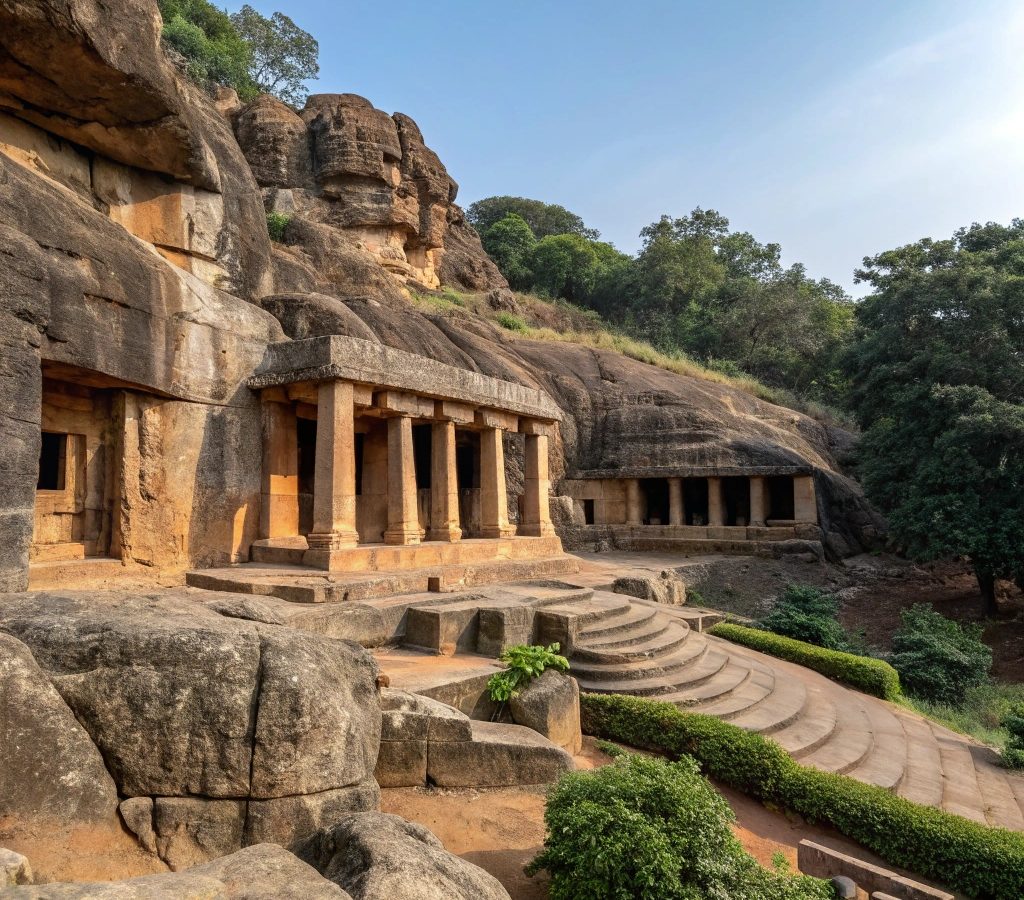
Located about 6 km from Bhubaneswar, the Udayagiri and Khandagiri Caves attract historians, pilgrims, and travelers alike. Visitors can explore notable caves such as Rani Gumpha, Hathi Gumpha, and Ganesh Gumpha, each with distinct artistic and historical significance. The panoramic view from the hilltop and the peaceful surroundings make it a perfect spot for heritage lovers and photographers.
Entry Fee:
• ₹25 per person (Indians)
• ₹250 per person (Foreign Tourists)
• ₹25 for Video Camera
Address | Khandagiri-Chandaka Rd, Khandagiri, Bhubaneswar, Odisha, 751030, India
Location | Bhubaneswar, Odisha
Timings | Monday – Sunday: 8:00 AM – 5:00 PM
Era / Age | 2nd Century BCE (Post-Mauryan)
Built By | King Kharavela of the Mahameghavahana Dynasty
Religion | Jainism
Key Inscription | Hathigumpha Inscription (Cave 14, Udayagiri)
Total Caves | Udayagiri – 19 | Khandagiri – 15
History & Significance of Udayagiri and Khandagiri Caves
The twin hills of Udayagiri (“Sunrise Hill”) and Khandagiri (“Broken Hill”) are more than just caves; they are a historical library carved into stone. They stand as a crucial link to the ancient kingdom of Kalinga, defining a pivotal moment in the religious and political landscape of India.
The Udayagiri and Khandagiri Caves are a twin-hill cluster of rock-cut shelters, an extraordinary testament to ancient Indian history, art, and religion. Located in the capital city of Bhubaneswar, Odisha, these caves—dating back to the 2nd century BCE—are one of the foremost attractions in Eastern India, drawing historians, pilgrims, and tourists alike.
Mystery Fact
Some historians believe King Kharavela ruled far longer than inscriptions reveal, but parts of his record were eroded — keeping his full story a mystery.
There are theories he expanded influence beyond Kalinga into Central India, but lost texts make it hard to confirm.
His name even appears in Jain legends, hinting he may have been revered beyond just historical records.
Historical Background
King Kharavela
Purpose
Spiritual Importance
nscriptions & Carvings
National Importance
Historical Background
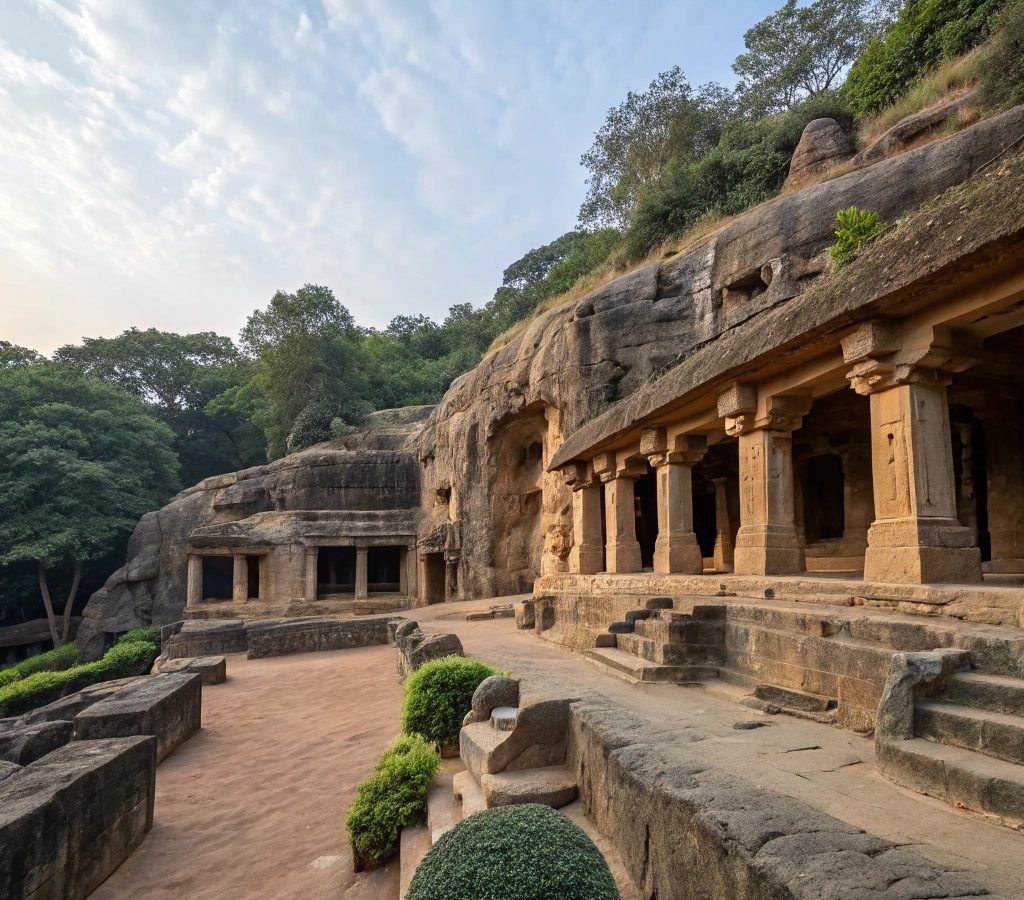
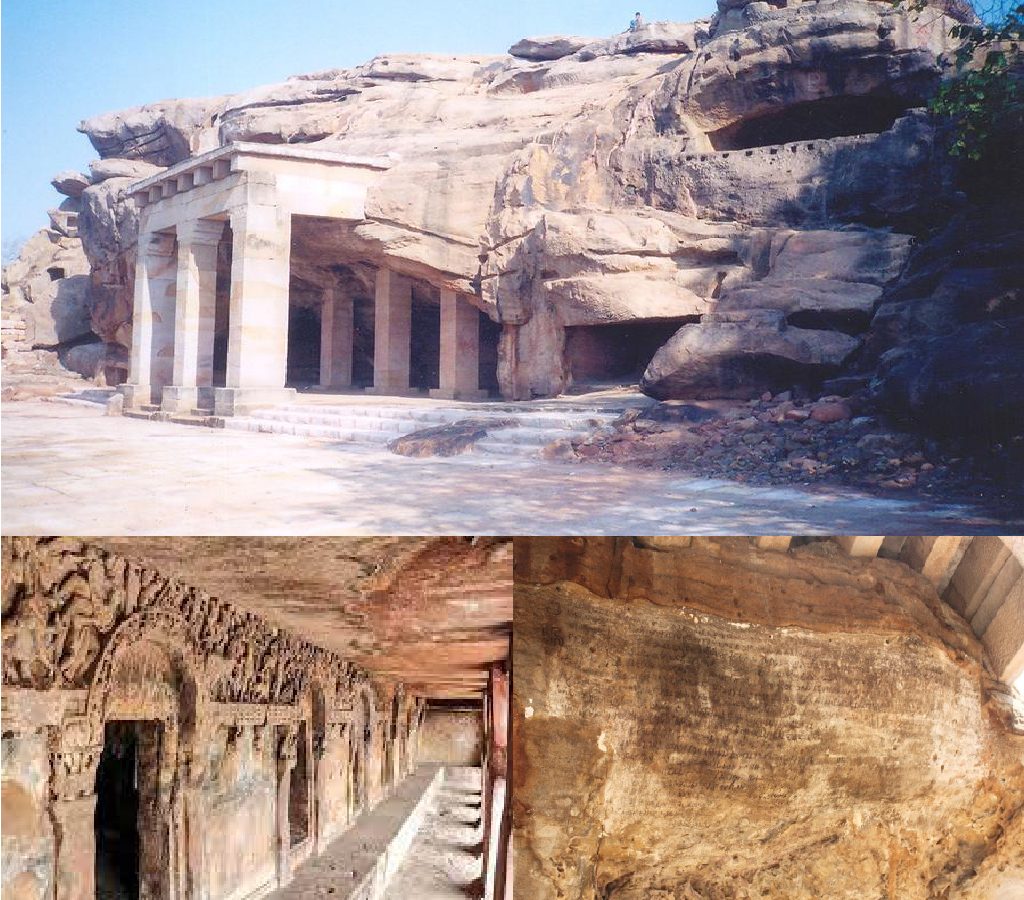
The caves of Udayagiri (19 in number) and Khandagiri (15 in number) were primarily excavated during the reign of the powerful Mahameghavahana dynasty. The earliest inscriptions and architectural styles place their construction firmly in the 2nd century BCE, making them contemporary with the post-Mauryan era and an essential example of early rock-cut architecture in India.
King Kharavela
The most prominent figure associated with the story of Udayagiri and Khandagiri Caves is King Kharavela, the third ruler of the Mahameghavahana dynasty of Kalinga. The caves were built under his direct patronage. Kharavela was a devout follower of Jainism, and his dedication to the religion is the fundamental reason why was Udayagiri and Khandagiri Caves built.
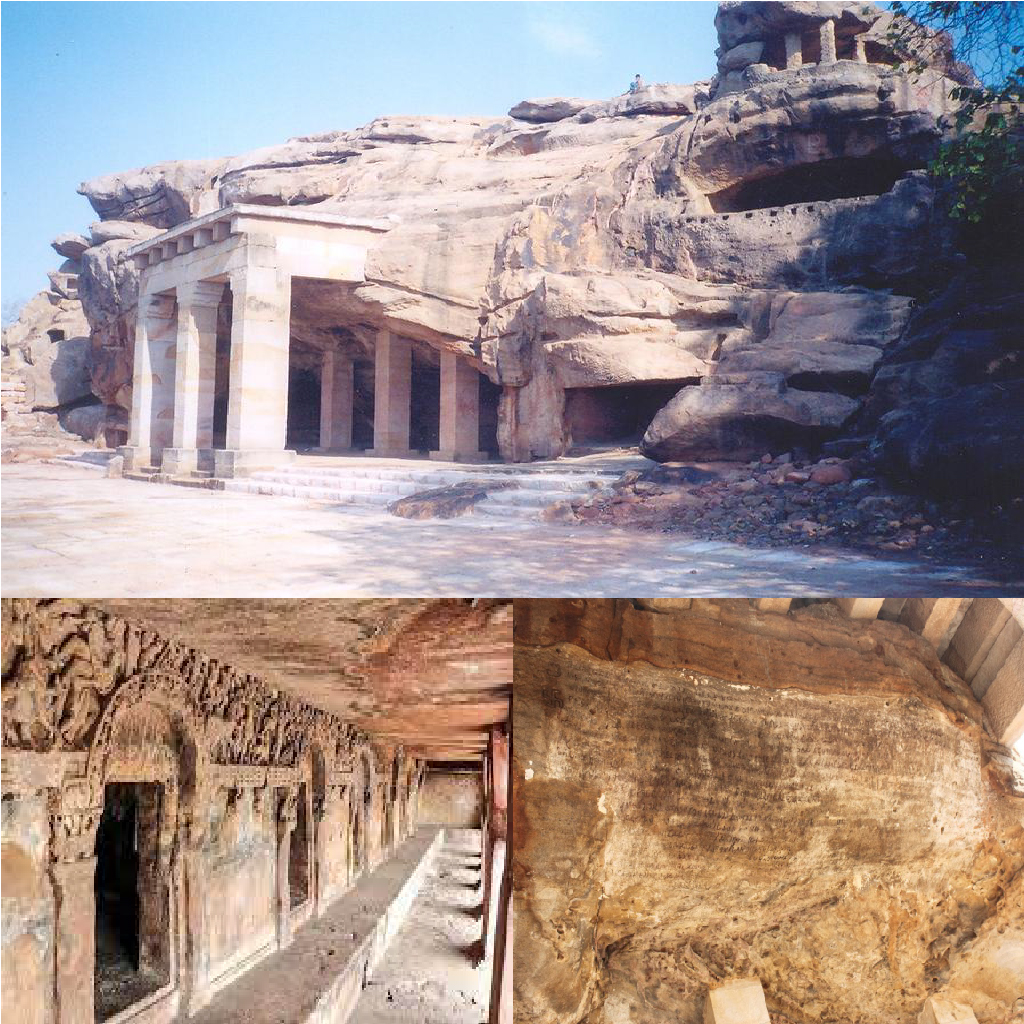
The most vital piece of evidence for this historical connection is the famous Hathigumpha Inscription (Elephant Cave Inscription) located in Cave 14 of Udayagiri. This inscription, written in Brahmi script, chronicles the seventeen-year reign of King Kharavela, his military victories, public works, and his devotion to the Jaina faith.
Purpose
The primary purpose behind the cave construction was to provide sheltered retreats, known as lenas, for Jain ascetics (monks and nuns) during the monsoon season. Following the ascetic tradition of Jainism, which encourages a simple, unattached lifestyle, these natural rock shelters were meticulously enlarged and carved into multi-storeyed monastic complexes to facilitate meditation, worship, and residence.
Spiritual Importance
The Udayagiri and Khandagiri Caves belong to the Jain religion. They represent one of the earliest and finest examples of Jain rock-cut shelters, preceding many famous Buddhist and Hindu cave sites. The presence of numerous Jaina religious symbols and sculptures confirms their spiritual significance.
- Jain Sculptures of Udayagiri and Khandagiri Caves: The carvings often depict figures believed to be Jain Tirthankaras, such as Rishabhanatha, and other associated figures like the Sasanadevis (female deities).
- Jain Symbol at Udayagiri and Khandagiri Caves: Symbols like the Kalpa Vruksha (wish-fulfilling tree), elephants, and figures in the kayotsarga (standing meditation) posture are prominent, reinforcing the Jaina ethos of the complex.
nscriptions & Carvings
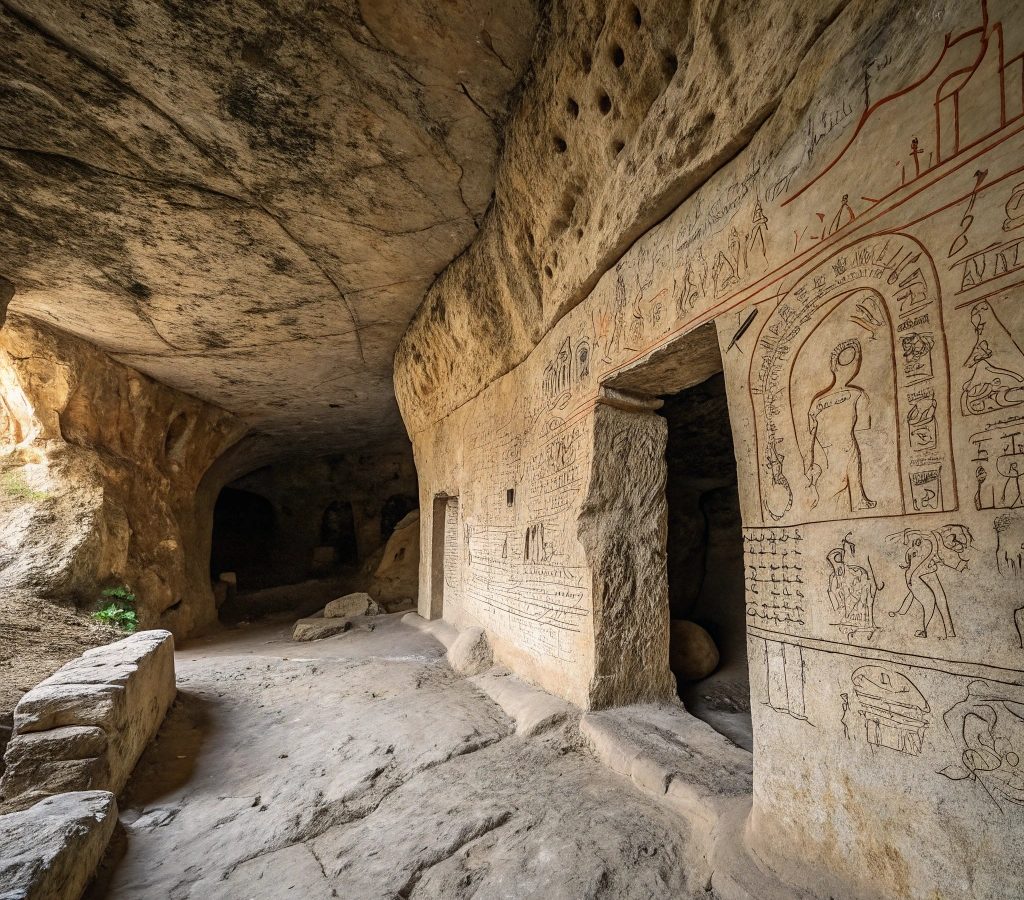
Beyond the Hathigumpha Inscription, numerous other smaller inscriptions are found across the cave walls, often recording the names of donors (royal members, officials, and ordinary citizens) who commissioned the excavation or decoration of individual cells. These inscriptions are priceless for historians, offering a window into the socio-political structure, royal lineage, and daily life of the ancient Kalinga region. The carvings also visually narrate Jaina legends, historical events, and scenes from everyday royal and common life, such as dance, processions, and warfare.
National Importance
The Khandagiri and Udayagiri Caves have been officially recognized as Monuments of National Importance by the Archaeological Survey of India (ASI). Their remarkable state of preservation and profound historical value make them a protected heritage site, crucial for understanding India’s ancient past. The complex contains a total of 34 caves (19 in Udayagiri and 15 in Khandagiri).
Architecture & Art of Udayagiri and Khandagiri Caves
The architecture of Udayagiri and Khandagiri Caves is a stunning demonstration of early Indian rock-cut craftsmanship. The style is primarily functional yet aesthetically rich, transforming natural rock formations into durable, habitable sanctuaries for ascetics.
Architecture Fact
King Kharavela transformed raw hill caves into organized monastic complexes at Udayagiri and Khandagiri, making them among India’s earliest rock-cut religious sites.
He introduced carved pillars, arched doorways, meditation chambers, and sculptural reliefs inspired by Jain philosophy.
These caves show early experiments in ventilation, multi-level planning, and community living spaces for monks.
His architectural vision laid the foundation for later masterpieces like Ajanta, Ellora, and other Indian cave traditions.
Rock-Cut Architecture
Carvings, Sculptures, and Reliefs
Layout of Udayagiri
Layout of Khandagiri
Jain Monks’ Inscriptions
Rock-Cut Architecture
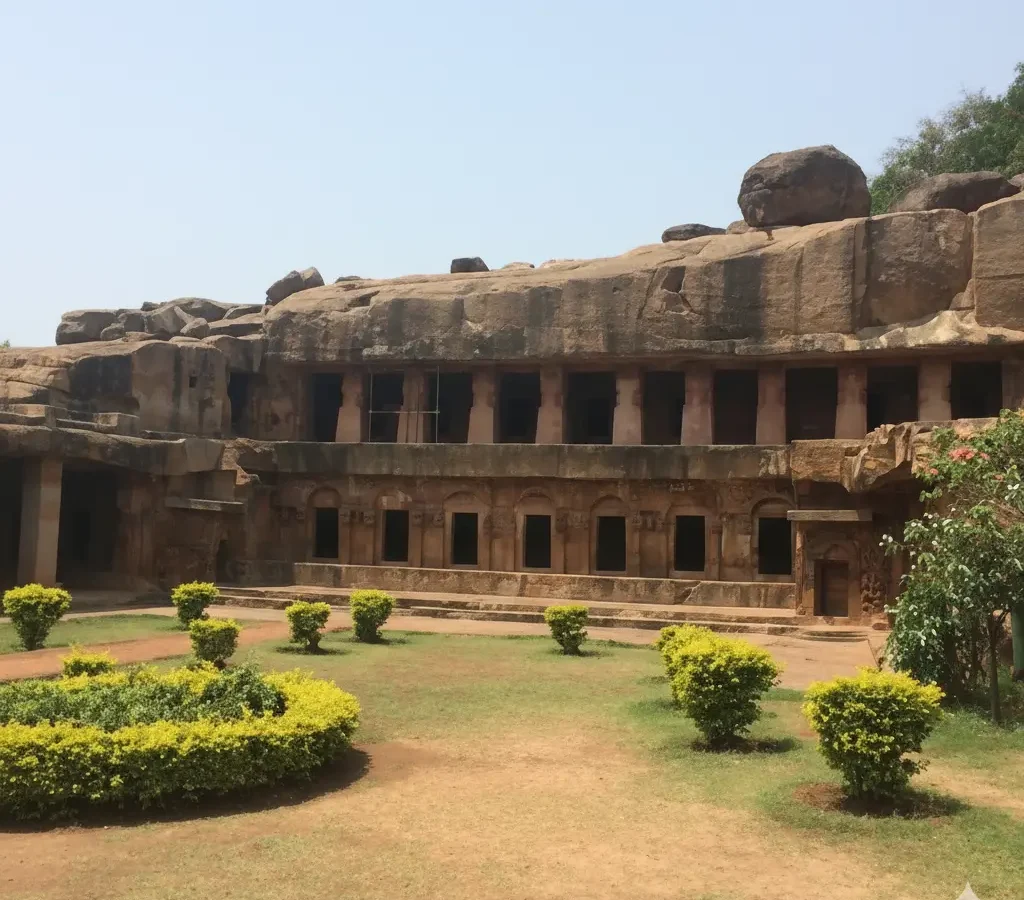
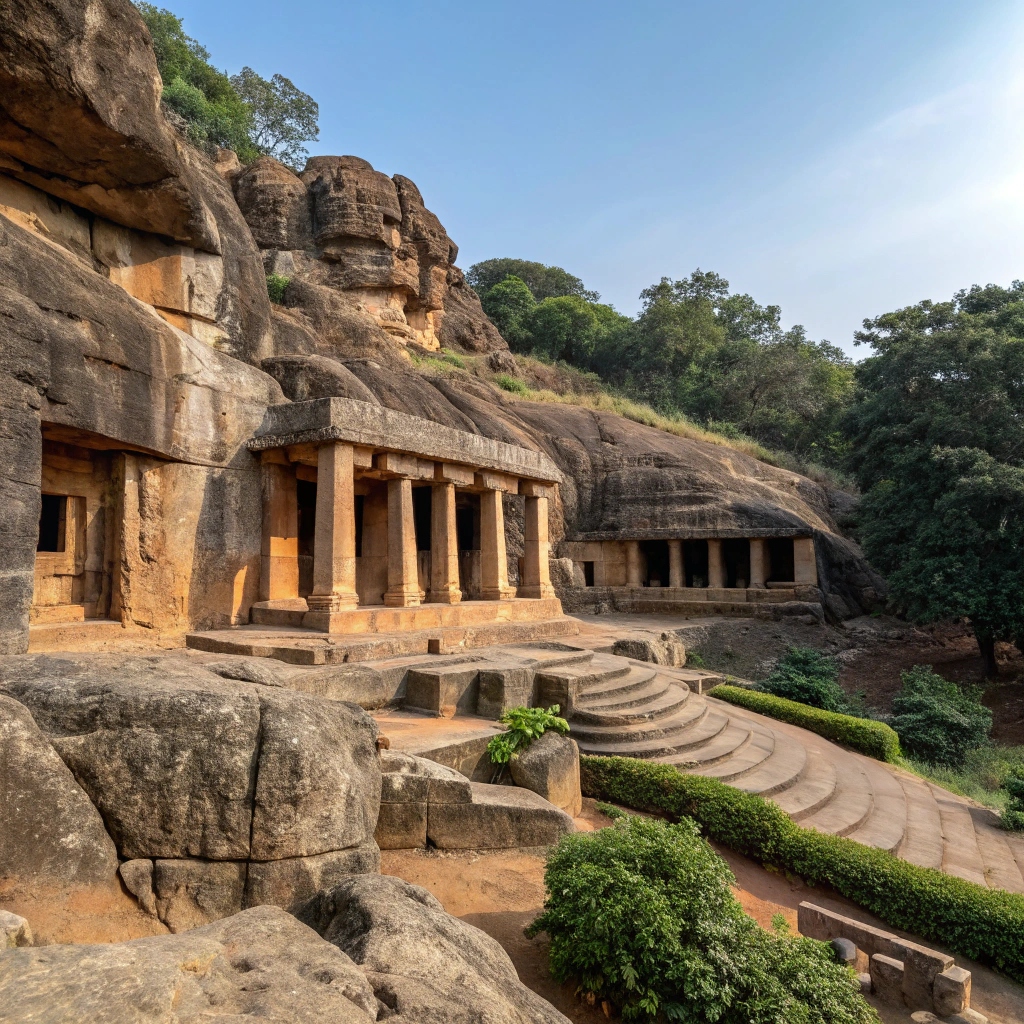
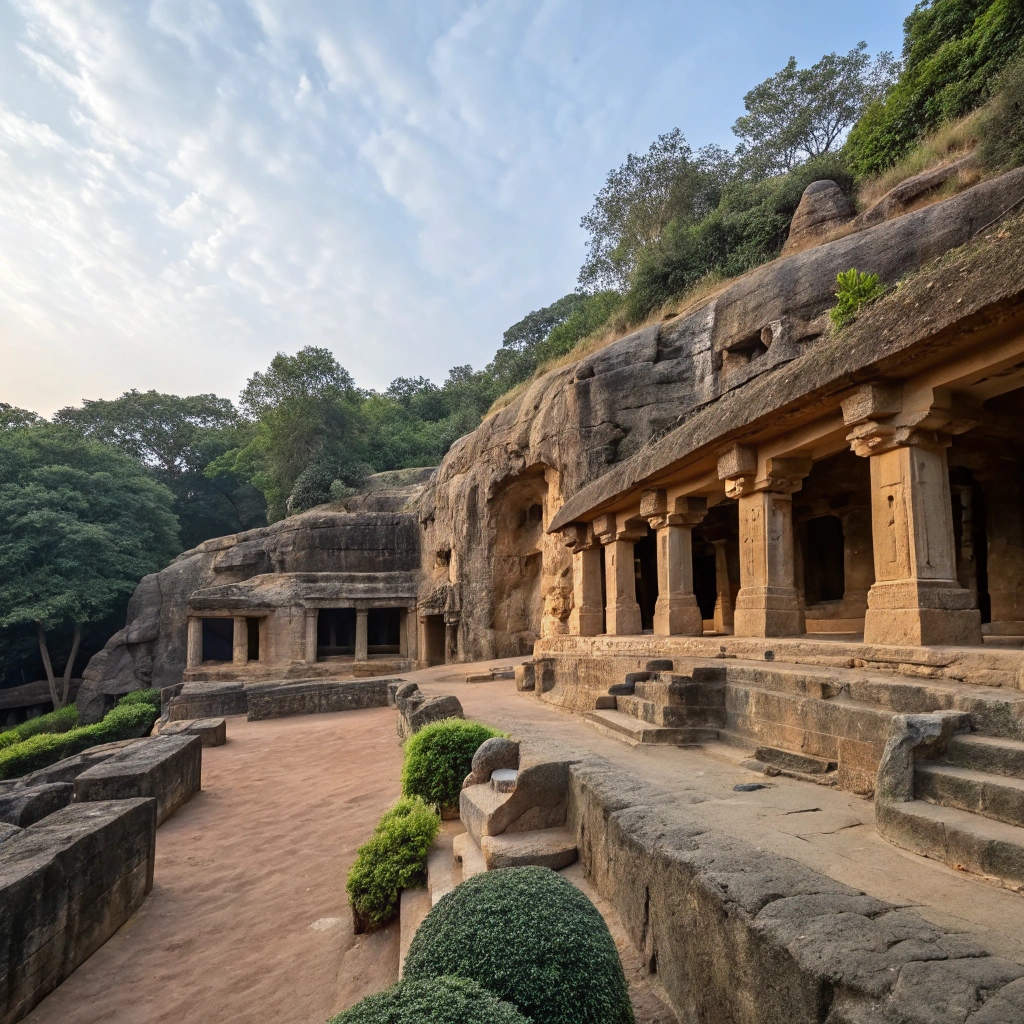
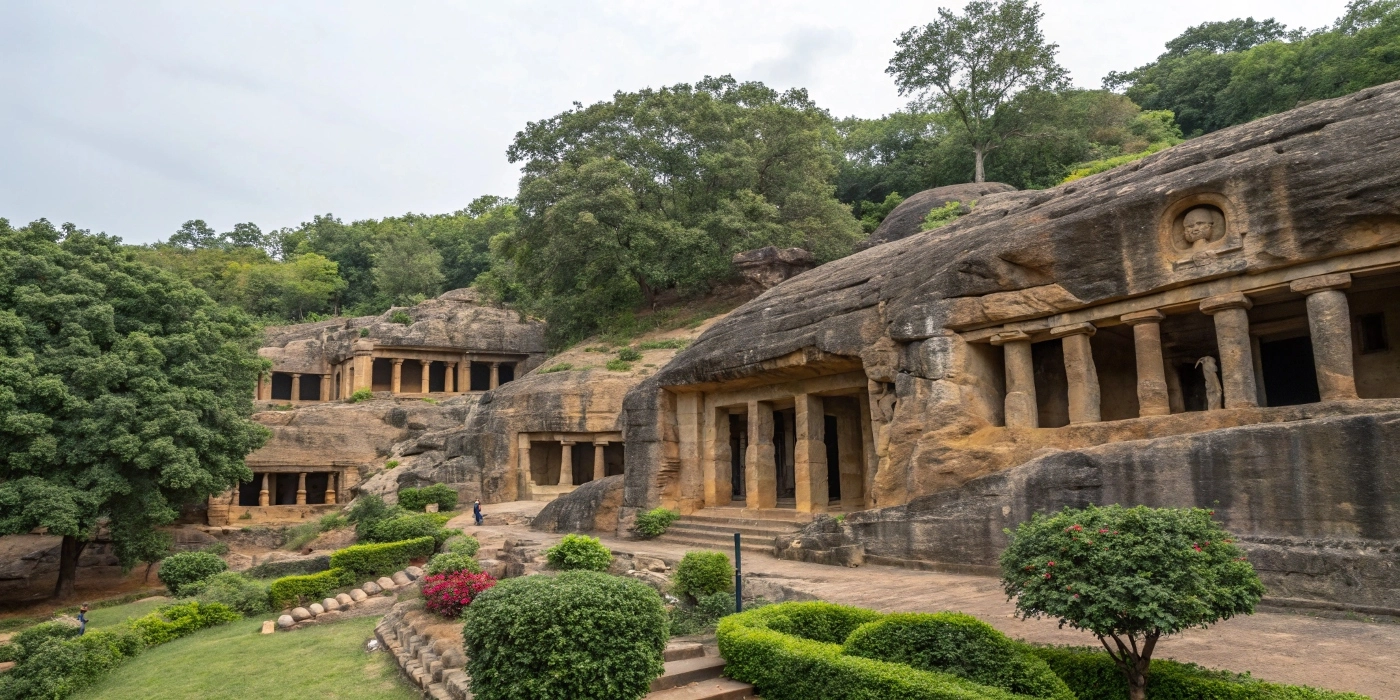
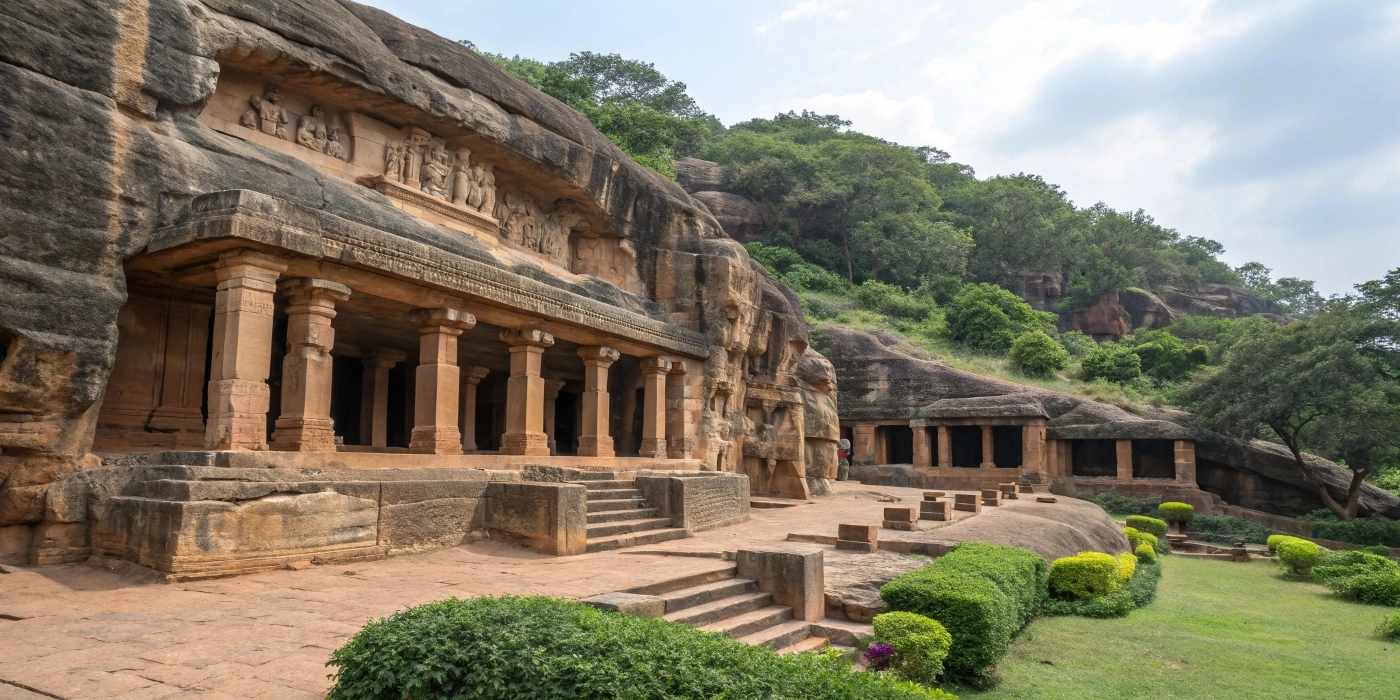
These rock-cut caves at Udayagiri and Khandagiri are examples of viharas (monasteries) and chaityas (prayer halls), though the main focus is on the monastic cells (lenas). The structures were not built with separate stones but were meticulously carved out of the parent sandstone rock of the two hills. The architectural features often mimic wooden constructions of the time, such as arched doorways, railings (vedikas), and pillared verandas.
Carvings, Sculptures, and Reliefs
The caves are famous for their extensive and lively sculptural decoration, which serves both religious and narrative purposes.
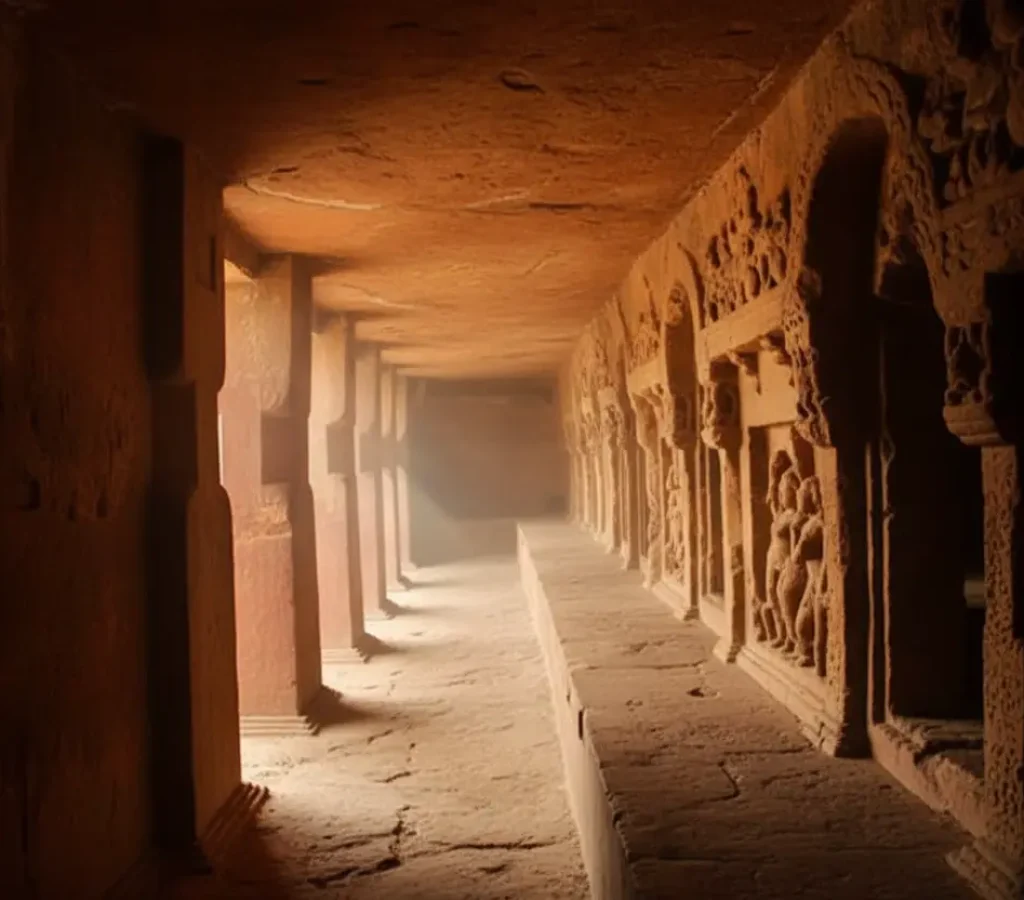
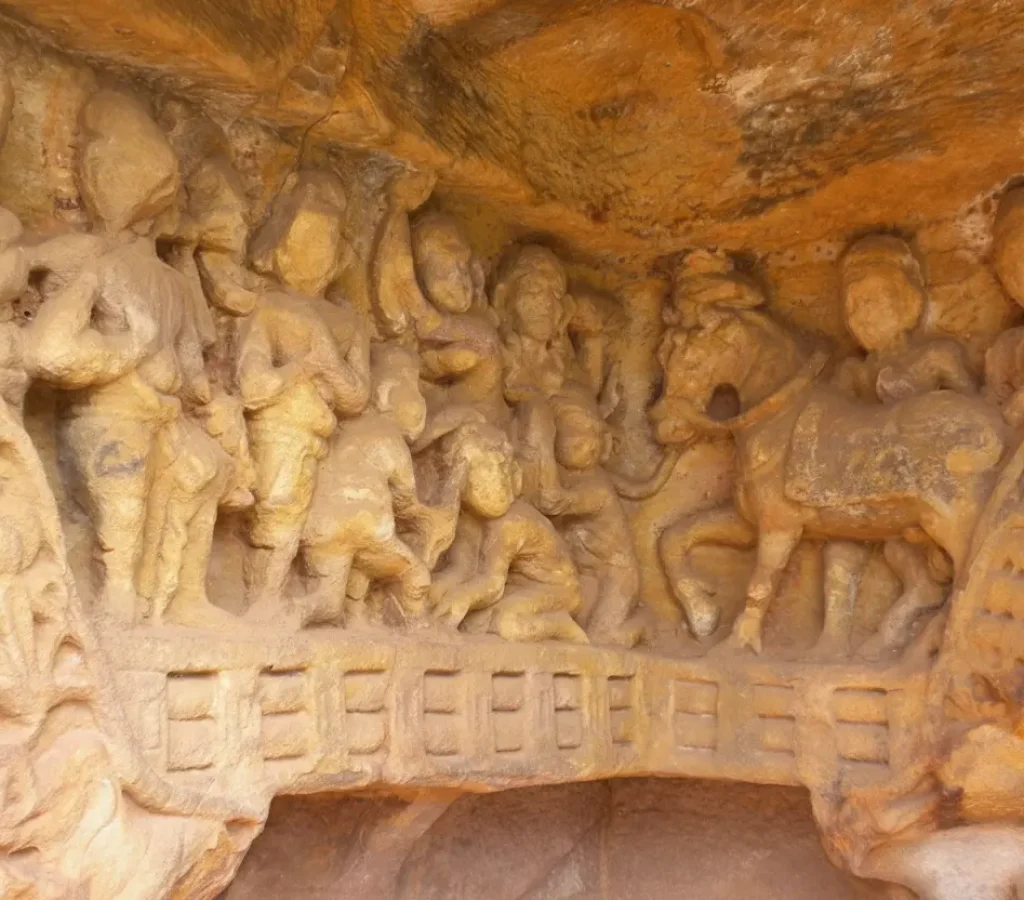
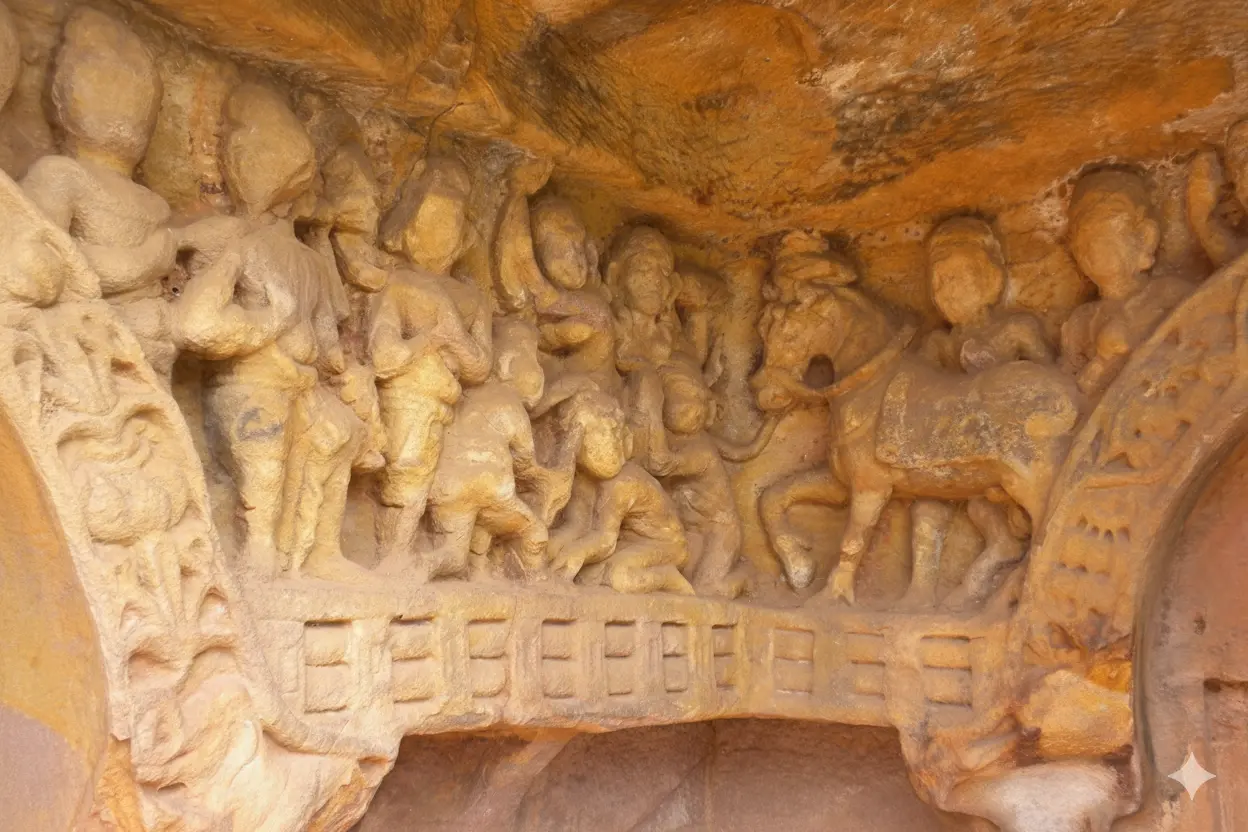
- Sculptures and Reliefs: The veranda walls and door jambs are densely covered with relief panels. Common subjects include scenes from Jaina legends, historical events (like military campaigns), royal court life, and mythological figures.
- Artistic Style and Symbolism: The style is distinctly early Kalinga art, characterized by robust, dynamic figures, intricate detailing of clothing and ornaments, and a high degree of naturalism. Animal motifs, particularly the elephant (Hathi), are frequent, symbolizing strength, royalty, and religious devotion.
Layout of Udayagiri
Udayagiri, the larger of the two hills, contains 19 caves, some of the most famous being:
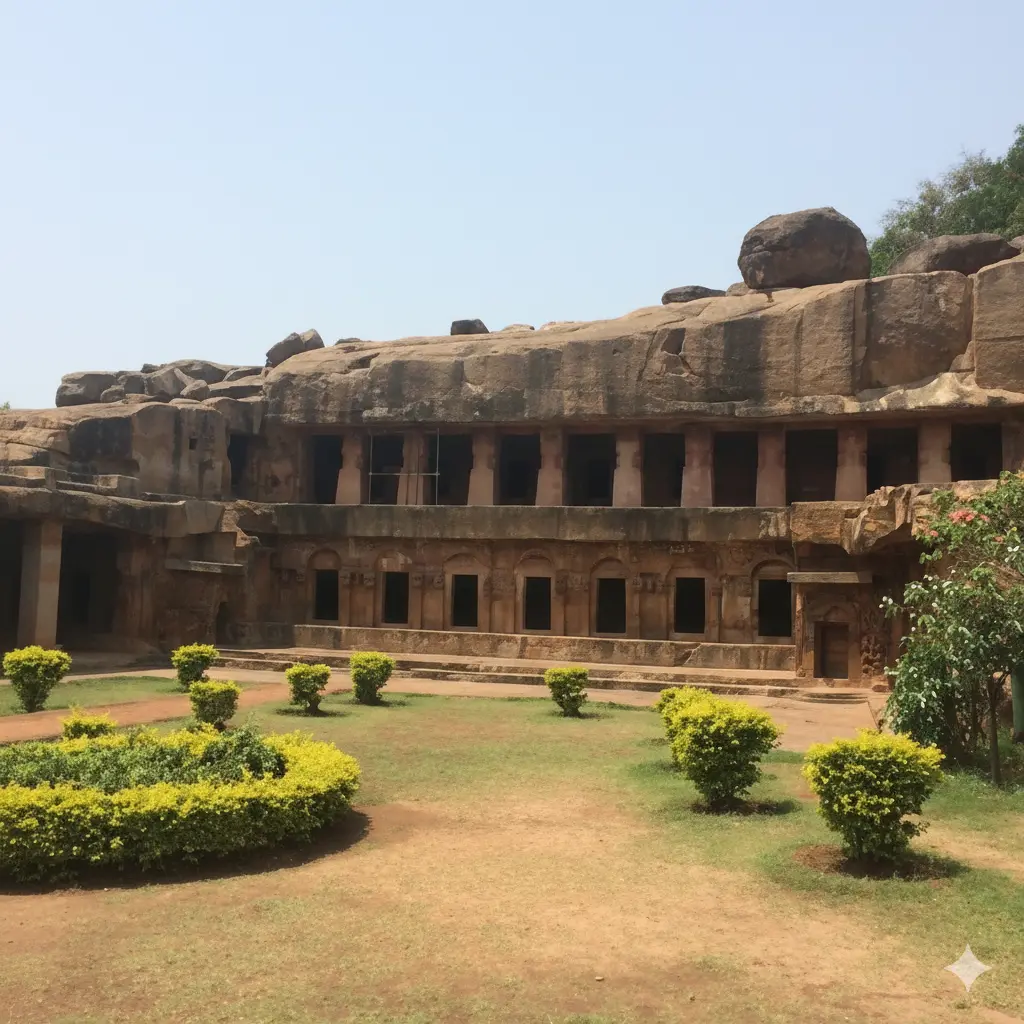
- Rani Gumpha (Queen’s Cave – Cave 1): The largest and most extensively carved cave, it is a double-storeyed monastery. Its friezes depict dramatic scenes, possibly from a historical or mythological drama. It is arguably the architectural and artistic peak of the complex.
- Hathigumpha (Elephant Cave – Cave 14): Historically the most significant due to the seventeen-line Hathigumpha Inscription of King Kharavela.
- Ganesha Gumpha (Ganesha Cave – Cave 10): Known for its beautifully carved figures, including a large elephant and reliefs illustrating the story of the abduction of Basavadatta.
- Jaya Vijaya Gumpha (Cave 8): A double-celled cave with ornate carvings and guardians (dvarapalas).
Layout of Khandagiri
Khandagiri, located opposite Udayagiri, contains 15 caves. While generally simpler, the hill also houses a functioning Digambara Jain Temple at its summit, making it an active religious site.
- Ananta Gumpha (Cave 3): Features notable carvings of women, elephants, and geese carrying flowers (Hamsa motif), an important Jaina symbol.
- Tentuli Gumpha (Cave 9): A simpler cave, reflecting the basic ascetic life.
Barabhuji Gumpha (Cave 11): Contains sculptures of the 24 Jain Tirthankaras, along with figures of Sasanadevis (Ambika).
Jain Monks’ Inscriptions
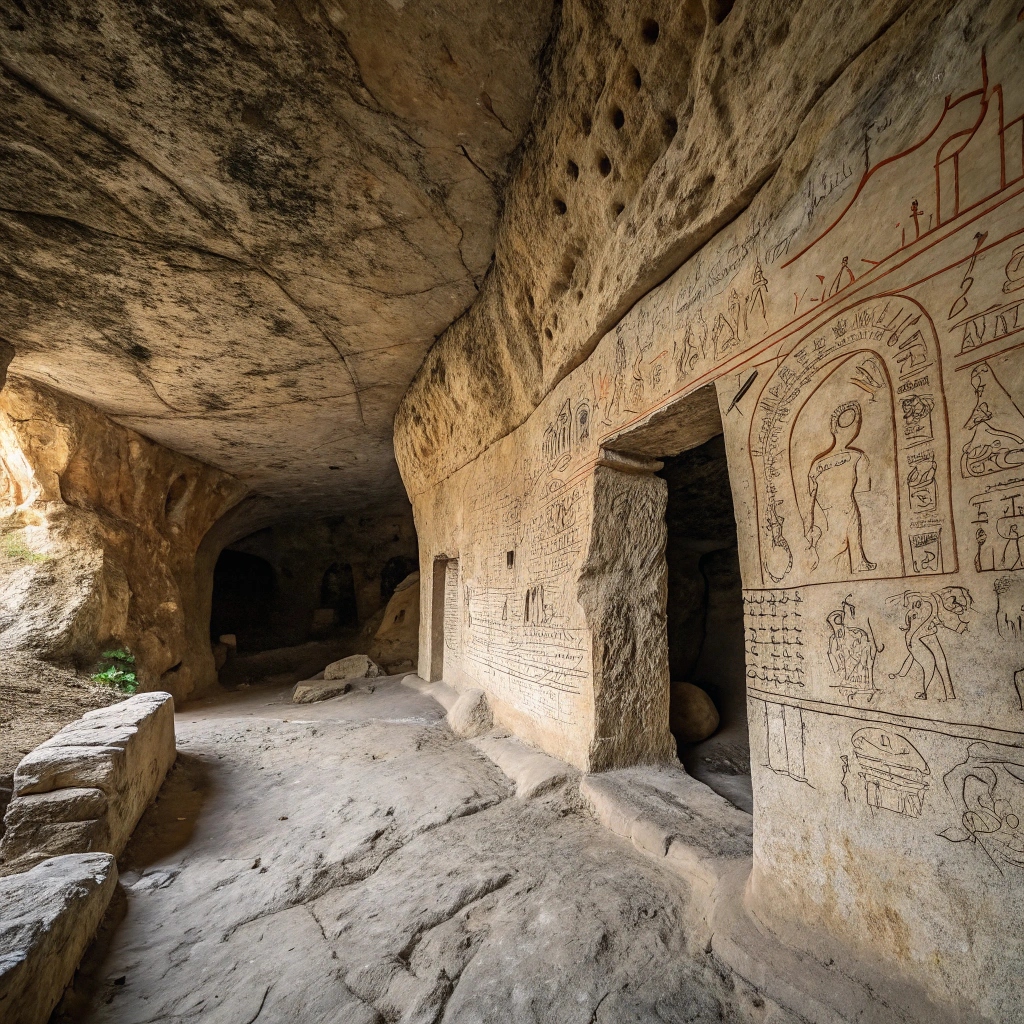
Apart from the major historical records, the monastic cells often bear brief inscriptions by the Jain monks themselves, detailing who occupied the cave and sometimes the year it was carved. These personal records highlight the profound connection between the caves and the ascetics they were designed to shelter.
Location & Geography
The Udayagiri and Khandagiri Caves are an integral part of the cultural and geographical identity of Odisha. They are situated in a highly accessible and historically significant region.
Their strategic location near the old capital Sisupalgarh allowed monks to stay peaceful yet connected to urban life and pilgrims.
Natural rock slopes and water-channels around the hills suggest early planning for rainwater flow and monsoon living.
Did You Know?
King Kharavela was not only a ruler and warrior — he was also trained in music, dance, and fine arts, something rarely seen in ancient kings.
His Hathigumpha inscription mentions his mastery in 72 arts before ascending the throne, showing he valued culture as much as conquest.
This unique blend of royal power and artistic talent makes him one of the most multidimensional rulers in Indian history.
Geographical Location
Overview
Climate and Topography
Preservation and Protection Status
Geographical Location
The caves are located in the capital city of Bhubaneswar, Odisha, India. The address is approximately 6-8 kilometers west of the city center. Their location on the periphery of the ancient city of Sisupalgarh suggests they were strategically placed yet secluded enough for ascetic practice.
Overview
The two hills, which are relatively small and part of the Eastern Ghats’ minor spurs, are separated by a major road (National Highway 16) but face each other across a distance of about 200 meters.
- Udayagiri (Sunrise Hill): The larger hill, containing 19 caves, offers a rewarding climb. The term Udayagiri literally means ‘Sunrise Hill’, possibly because the morning sun illuminates its carvings.
- Khandagiri (Broken Hill): The smaller hill, with 15 caves, has a higher elevation and offers a superb panoramic view of Bhubaneswar, earning it the name ‘Broken Hill’.
Climate and Topography
The caves are situated in a tropical savanna climate zone. The rock used for excavation is coarse-grained sandstone, which was relatively easy to cut but susceptible to weathering over two millennia, necessitating continuous preservation efforts. The hills rise abruptly from the flat coastal plains of Odisha, making them prominent landmarks.
Preservation and Protection Status
The site is protected by the Archaeological Survey of India (ASI) and falls under the “Monuments of National Importance” category. Preservation efforts focus on managing the erosion of the soft sandstone, protecting the intricate carvings, and ensuring the structural stability of the rock-cut shelters.
How to Reach Udayagiri and Khandagiri Caves
The location of the Udayagiri and Khandagiri Caves in the heart of Bhubaneswar ensures excellent connectivity via road, rail, and air. They are a convenient addition to any itinerary across Odisha’s Golden Triangle (Bhubaneswar, Puri, Konark).
Location Overview
The caves are situated on the western edge of Bhubaneswar, directly accessible from National Highway 16 (NH16).
Distance from Major Cities
The caves are strategically located relative to key travel hubs:
- Distance from Bhubaneswar Railway Station (BBS): Approximately $7-8$ km.
- Distance from Biju Patnaik International Airport (BBI): Approximately $6-7$ km.
- Distance from Puri: Approximately $65$ km.
- Distance from Cuttack: Approximately $25$ km.
Route from Bhubaneswar
Route from Puri
Nearest Railway Stations & Airports
Tips for Travelers
Route from Bhubaneswar
Bhubaneswar, the temple city, is the primary entry point for visiting the caves.
- By Air (BBI): The Biju Patnaik International Airport is the nearest airport. Taxis, auto-rickshaws, and ride-sharing services are readily available to cover the short $6-7$ km distance.
- By Rail (BBS): The Bhubaneswar Railway Station is well-connected. A short taxi or auto-rickshaw ride will take you directly to the site.
- By Road: The caves are a landmark near the Khandagiri Chowk on NH16. Local city buses, shared auto-rickshaws, and private taxis offer the fastest and most convenient access from anywhere in Bhubaneswar, including areas like Nayapalli or the Baramunda Bus Stand.
Route from Puri
A visit to the caves is a popular day trip from Puri, especially for tourists visiting the Jagannath Temple.
- By Car/Taxi: The most comfortable option is hiring a private taxi or car. The distance from Puri to Udayagiri and Khandagiri Caves is about $65$ km, taking approximately $1.5$ to $2$ hours via NH316 and NH16.
- By Bus: State and private buses operate frequently from Puri to Bhubaneswar’s Baramunda Bus Stand, from where local transport can be used.
Nearest Railway Stations & Airports
Nearest Airport: Biju Patnaik International Airport, Bhubaneswar (BBI).
Nearest Major Railway Station: Bhubaneswar Railway Station (BBS).
Tips for Travelers
- Auto-rickshaws: Always negotiate the fare or ensure the meter is running, especially for the return journey.
- Timing: The caves involve some climbing and walking, so it is advisable to visit in the morning or late afternoon to avoid the midday sun.
Visiting Information & Timings
Planning your visit to the Udayagiri and Khandagiri Caves is straightforward, but knowing the correct timings and procedures will enhance your experience.
Opening & Closing Hours
The caves are managed by the Archaeological Survey of India (ASI) and maintain standard heritage site hours.
- Udayagiri and Khandagiri Caves Timings / Opening Hours: Generally, the caves are open from Sunrise (around 6:00 AM) to Sunset (around 5:30 PM).
- Weekly Holiday: The caves are generally open on all days, but it is always best to check for any public or maintenance holidays.
Best Time to Visit
- Season: The best time to visit is during the winter months (October to March) when the weather is cool and pleasant. The summer months (April to June) can be very hot, making the climb difficult.
- Time of Day: Early mornings (6:00 AM – 9:00 AM) or late afternoons (3:00 PM – 5:30 PM) are ideal for comfortable exploration, photography, and avoiding large crowds.
Entry Fee (Domestic & Foreign)
Travel Tips
Photography & Guide Rules
Tour Options & Itinerary
Entry Fee (Domestic & Foreign)
There is a nominal Udayagiri and Khandagiri Caves entry fee collected by the ASI. This fee is subject to change, but generally follows the below structure:
- Indian Citizens and Visitors from SAARC/BIMSTEC Countries: Typically a small fee per person.
- Foreign Tourists: A higher entry fee per person.
Tickets can often be purchased online via the ASI website or at the ticket counter near the Udayagiri complex entrance.
Travel Tips
- Footwear: Wear comfortable walking shoes, as the paths and steps on both hills are uneven.
- Water: Carry plenty of drinking water, especially if visiting during warmer hours.
- Explore Both: Udayagiri and Khandagiri are separate hills with separate entries (though very close). Allocate time to explore both fully.
Photography & Guide Rules
- Photography: Still photography is usually permitted without an extra charge. However, commercial photography or videography may require special permission.
- Guides: Licensed local guides are often available at the entrance and can offer in-depth historical and architectural insights for a negotiated fee.
Tour Options & Itinerary
The caves can be easily covered in half a day. A typical itinerary is:
- Morning (6:30 AM – 9:00 AM): Explore Udayagiri (Rani Gumpha, Hathi Gumpha).
- Late Morning (9:00 AM – 11:00 AM): Cross the road and explore Khandagiri, culminating in the Jain Temple at the summit.
Nearby Attractions & Travel Routes
The Udayagiri and Khandagiri Caves are located in Bhubaneswar, forming the northern point of Odisha’s famous “Golden Triangle.” They are conveniently situated for travelers exploring the state’s cultural and natural heritage.
Nearby Temples and Landmarks
The caves are in close proximity to other significant sites in Bhubaneswar:
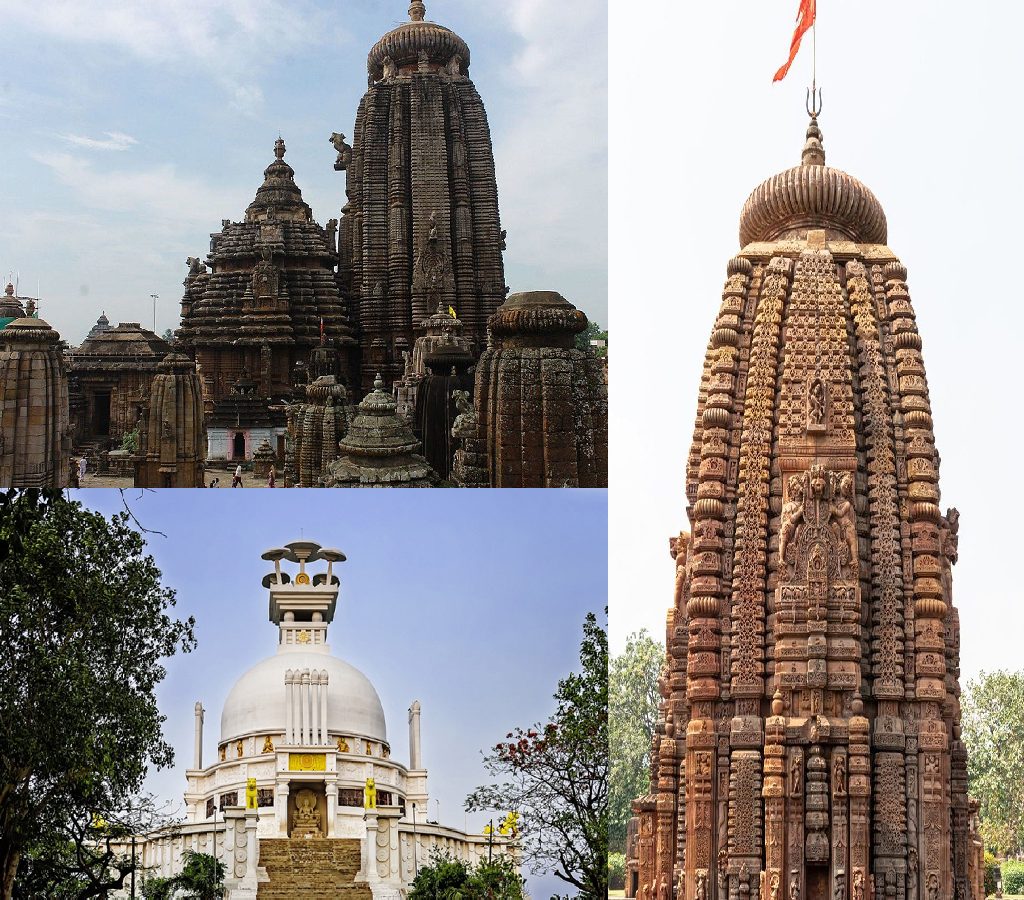
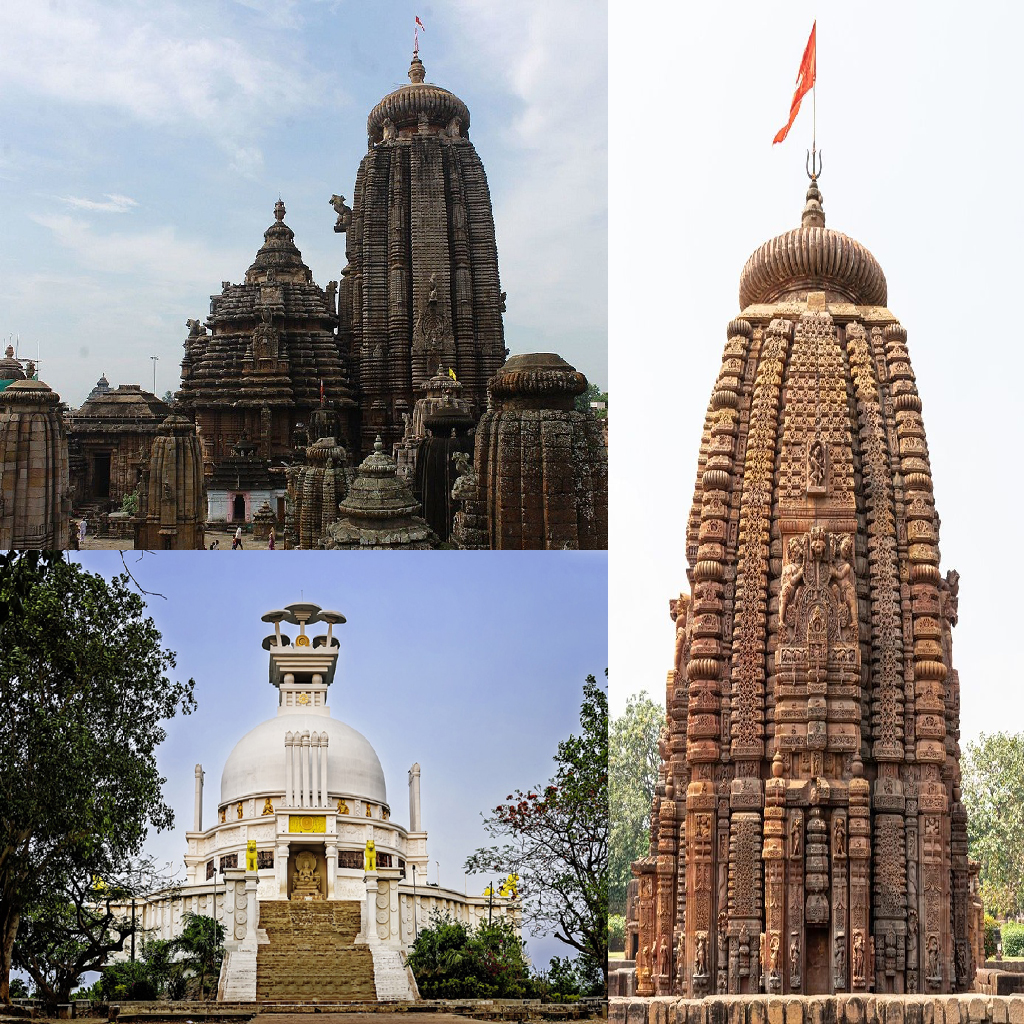
- Lingaraj Temple: One of the oldest and largest temples in Bhubaneswar, dedicated to Lord Shiva, located about $10$ km away.
- Dhauli Giri Shanti Stupa (Peace Pagoda): Site of the Kalinga War and Ashoka’s rock edicts, offering beautiful views.
- Mukteshwar Temple: A jewel of Odishan architecture, known for its exquisite carvings.
Puri & Jagannath Temple
Bhitarkanika National Park
ISKCON Bhubaneswar
Raghurajpur Heritage Village
Puri & Jagannath Temple
Udayagiri and Khandagiri Caves to Puri is a very popular day trip route, with a distance of approximately $65$ km. Puri is famous for the Jagannath Temple, one of the four Char Dhams (sacred pilgrimage sites) in Hinduism, and its beautiful beaches.
Bhitarkanika National Park
While not immediately nearby, the caves can be integrated into a larger Odisha tourism circuit that includes Bhitarkanika National Park, known for its saltwater crocodiles and dense mangrove forests. The distance to Bhitarkanika’s entry point is about $160-200$ km.
ISKCON Bhubaneswar
The modern ISKCON Bhubaneswar temple is relatively close to the caves, a short distance from the Khandagiri area. The Udayagiri and Khandagiri Caves to ISKCON Odisha distance is a short, manageable drive of only a few kilometers.
Raghurajpur Heritage Village
Located about 10-15 km from Puri, the heritage village of Raghurajpur is famous for Patachitra paintings and other Odishan handicrafts. Tourists can easily cover the caves, Puri, and Raghurajpur in a 2-3 day itinerary.
Gallery & Media
Aerial & Map Views
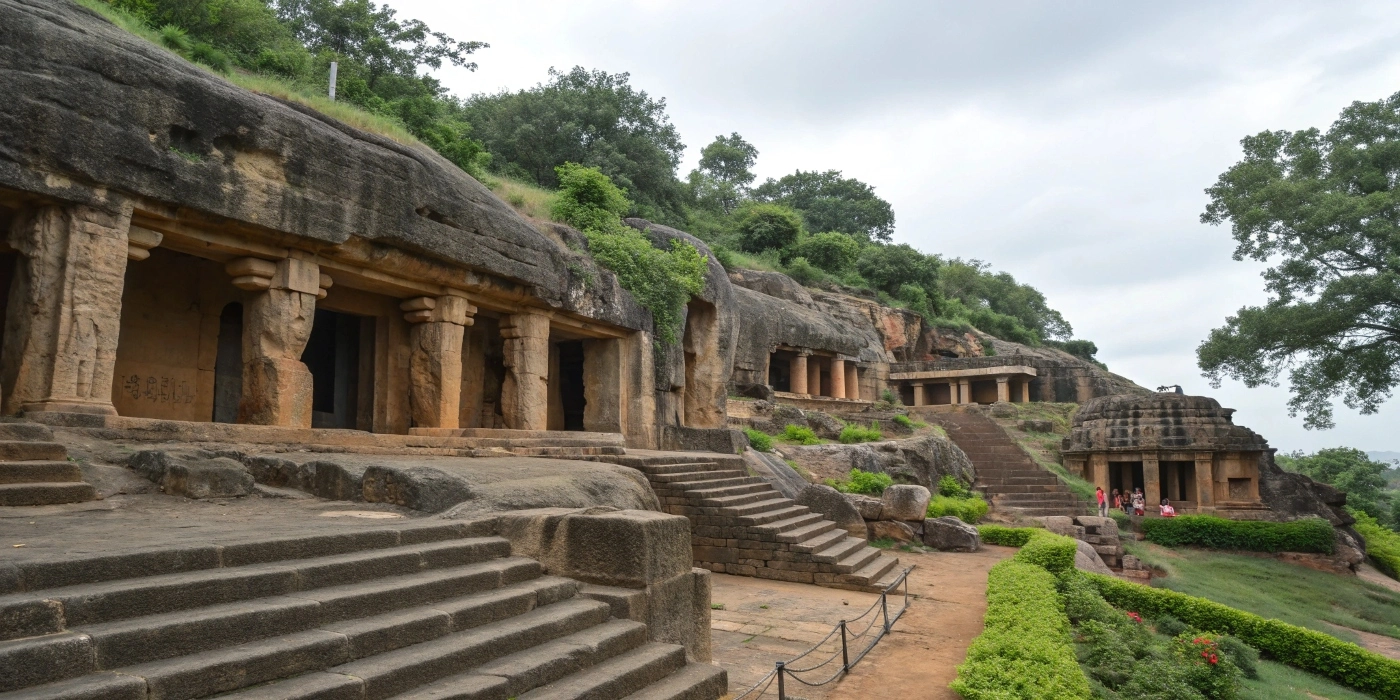
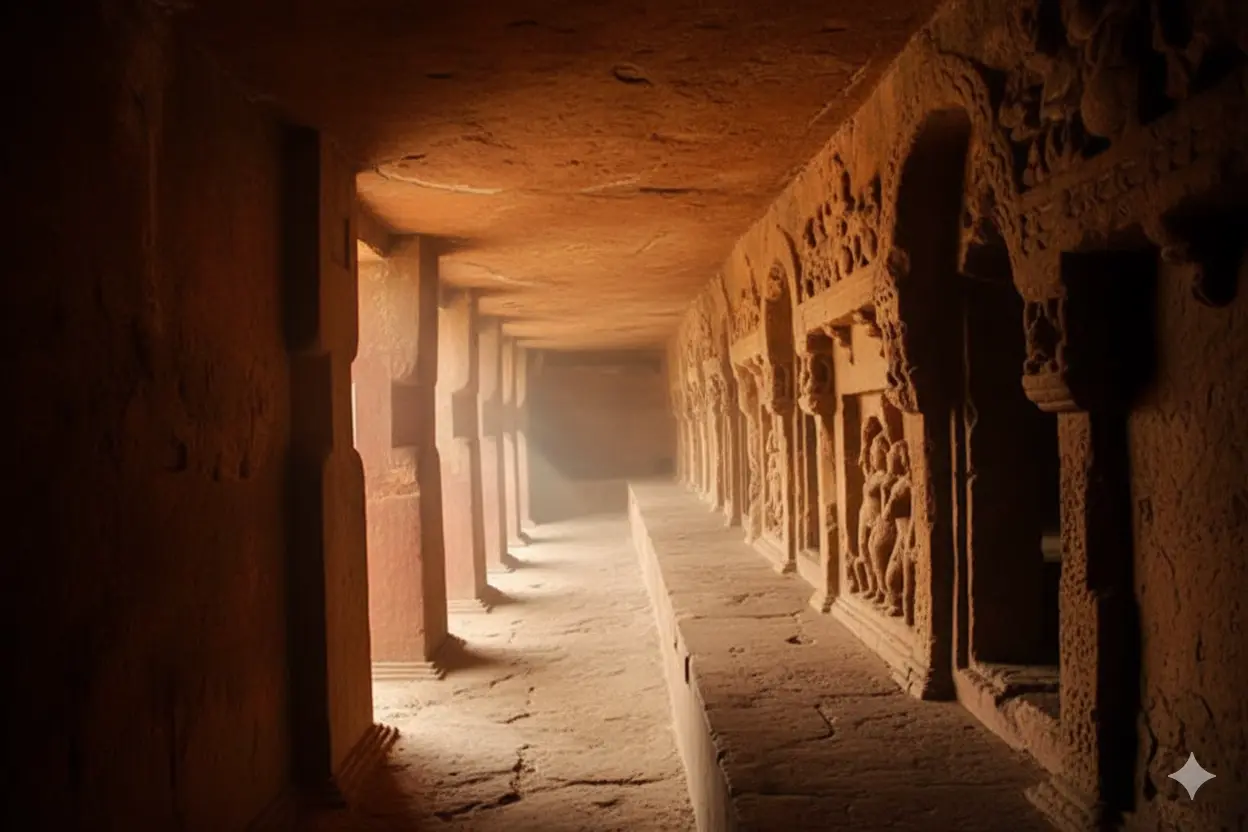
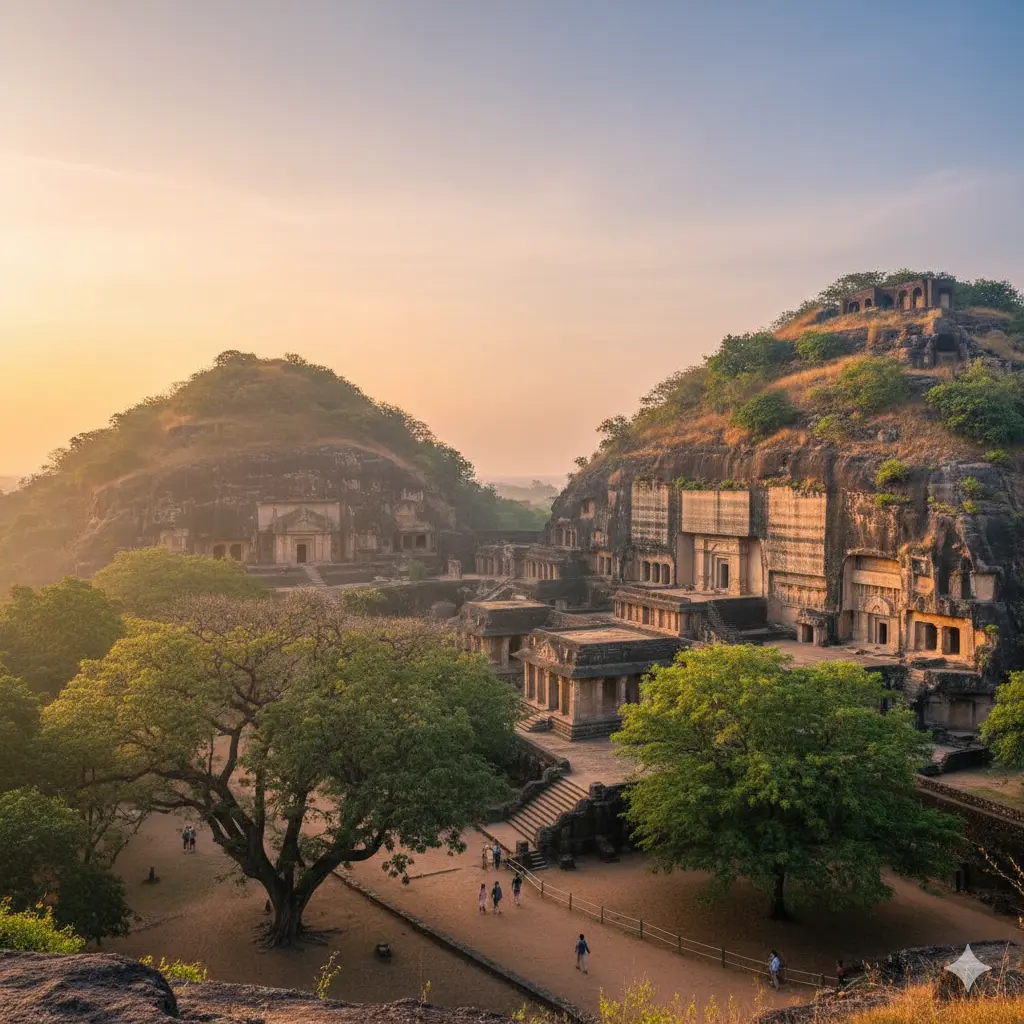
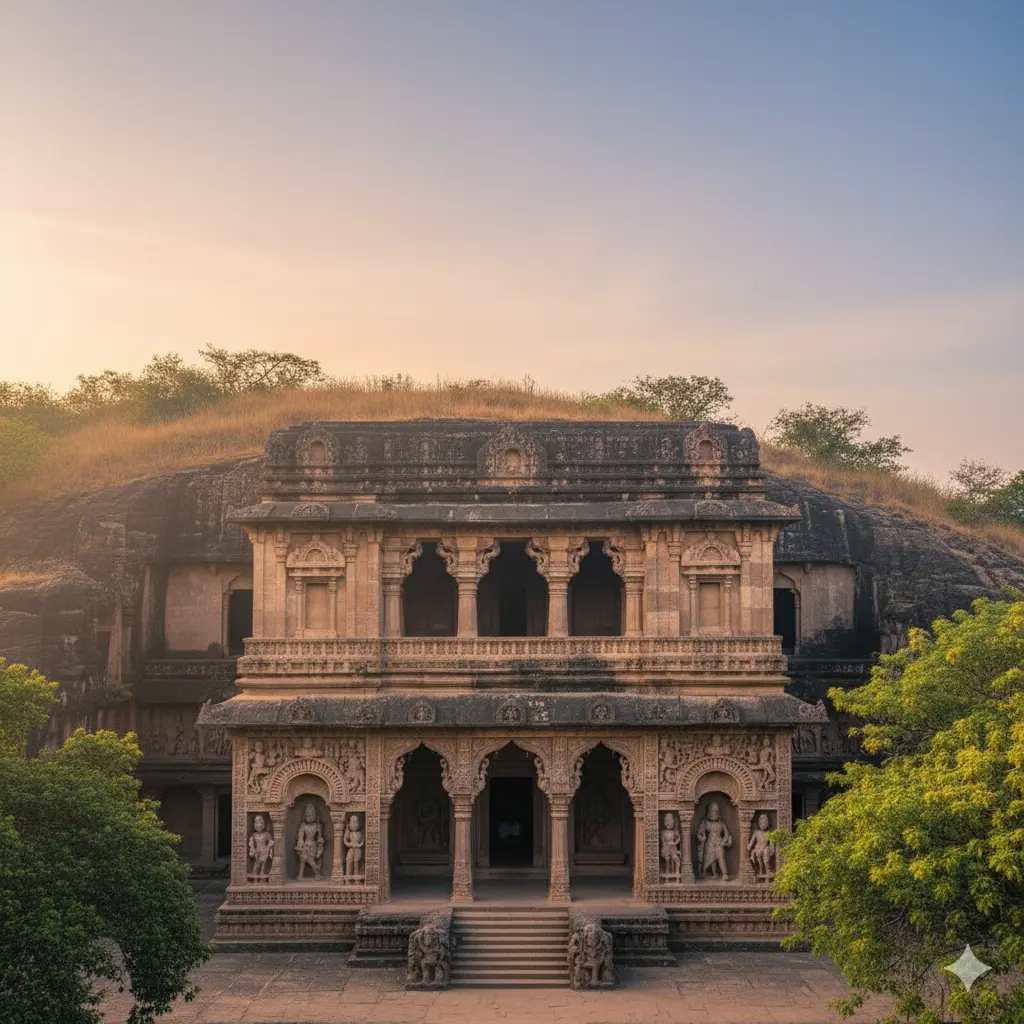
Caves of Udayagiri and Khandagiri on map views clearly show their orientation: the two hills facing each other across the road. Aerial shots provide context for the monastic layout and the surrounding Bhubaneswar cityscape.
Video Clips & Virtual Tours
A virtual tour offers a dynamic experience, allowing viewers to appreciate the layered architecture of the double-storeyed Rani Gumpha and the climb up Khandagiri Hill for the view.
Educational & Informational Resources
Overview for UPSC & Competitive Exams
For aspirants preparing for the UPSC (Union Public Service Commission) and other civil services exams, the caves are critical for understanding the Post-Mauryan Period and the development of early rock-cut architecture.
- Key Fact for UPSC: The Hathigumpha Inscription is an essential primary source for the history of King Kharavela and the Kalinga kingdom. It is one of the earliest known examples of royal autobiography and Brahmi script.
- Architectural Significance: The caves represent the transition from simple natural shelters to formal, decorated monastic viharas.
Hindi Summary
उदयगिरि और खंडगिरि गुफाएँ: ये ओडिशा के भुवनेश्वर के पास स्थित ऐतिहासिक रॉक-कट गुफाएँ हैं। इनका निर्माण मुख्य रूप से ईसा पूर्व दूसरी शताब्दी में जैन भिक्षुओं के निवास के लिए राजा खारवेल के शासनकाल में किया गया था। उदयगिरि में $19$ और खंडगिरि में 15 गुफाएँ हैं। हाथीगुम्फा शिलालेख, जो राजा खारवेल के बारे में जानकारी का मुख्य स्रोत है, उदयगिरि गुफाओं में ही स्थित है।
Miscellaneous & Curiosities
Beyond the documented history, the caves are also a subject of local lore and tourism development.
Myths & Local Beliefs
Despite their Jain origins, the caves often feature in local Hindu and tribal myths. Legends sometimes weave tales of hidden passages or royal treasures, reflecting the site’s importance in the popular imagination. Local guides may narrate the myths associated with individual caves like the Ganesha Gumpha or the Hathi Gumpha.
Tourism Initiatives in Odisha
The Odisha Tourism Department actively promotes the Udayagiri and Khandagiri Caves as a key component of its heritage circuit. The caves are part of a larger plan to develop Bhubaneswar as a primary hub for cultural and historical tourism, benefiting from its excellent connectivity.
References
For further in-depth study, the following resources are highly recommended:
FAQs
Khandagiri and Udayagiri are famous for their ancient Jain rock-cut caves, inscriptions, and sculptures dating back to the 2nd century BCE. They served as meditation retreats for Jain monks under King Kharavela’s patronage and are known for their historical and archaeological significance.
It typically takes 2 to 3 hours to explore both Udayagiri and Khandagiri Caves. Visitors often spend extra time enjoying the hilltop views and capturing photos of the heritage site.
The caves were commissioned by King Kharavela of the Mahameghavahana dynasty in the 2nd century BCE as dwellings and meditation spaces for Jain monks.
The entry fee for Udayagiri Caves is ₹25 for Indian visitors and ₹300 for foreign tourists. Children below 15 years are usually allowed free entry.
The best time to visit Khandagiri is between October and February, when the weather is pleasant for climbing and exploring the caves.
Udayagiri caves
Khandagiri caves
Udayagiri caves
| 1. Rani Gumpha (Cave of the Queen) | 10. Ganesha Gumpha |
| 2. Bajaghara Gumpha | 11. Jambesvara Gumpha |
| 3. Chota Hathi Gumpha | 12. Vyaghra Gumpha |
| 4. Alakapuri Gumpha | 13. Sarpa Gumpha |
| 5. Jaya Vijaya Gumpha | 14. Hati Gumpha |
| 6. Panasa Gumpha | 15. Dhanaghara Gumpha |
| 7. Thakurani Gumpha | 16. Haridasa Gumpha |
| 8. Patalapuri Gumpha | 17. Jagannatha Gumpha |
| 9. Mancapuri & Swargapuri Gumpha | 18. Rasui Gumpha |
Khandagiri caves
| 1. Tatowa Gumpha | 7. Navamuni Gumpha |
| 2. Tatowa Gumpha | 8. Barabhuji Gumpha |
| 3. Ananta Gumpha | 9. Trusula Gumpha |
| 4. Tentuli Gumpha | 10. Ambika Gumpha |
| 5. Khandagiri Gumpha | 11. Lalatendu Keshari Gumpha |
| 6. Dhyana Gumpha |